Equipment Category
Used Cryogenic Vaporizers for Sale
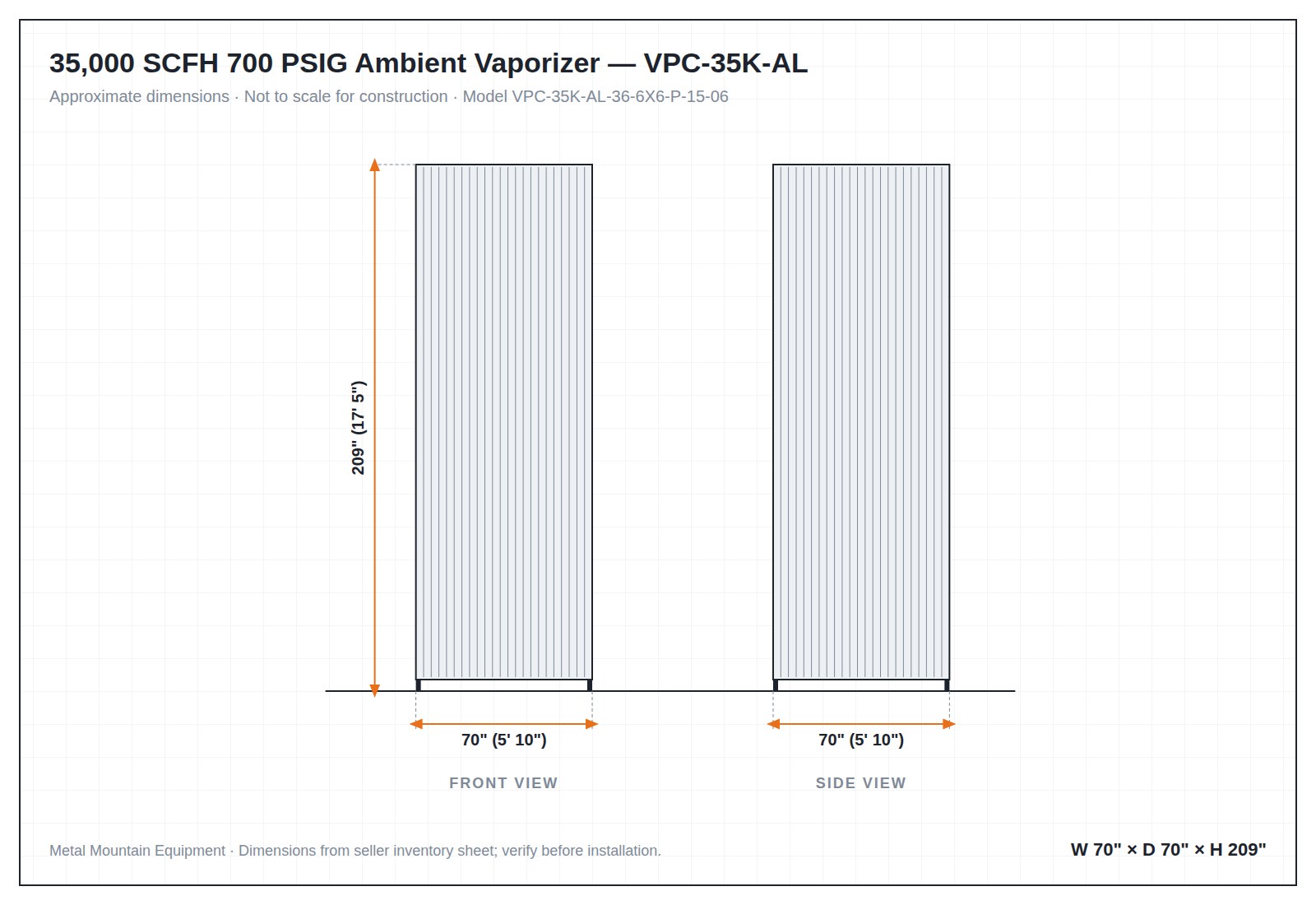
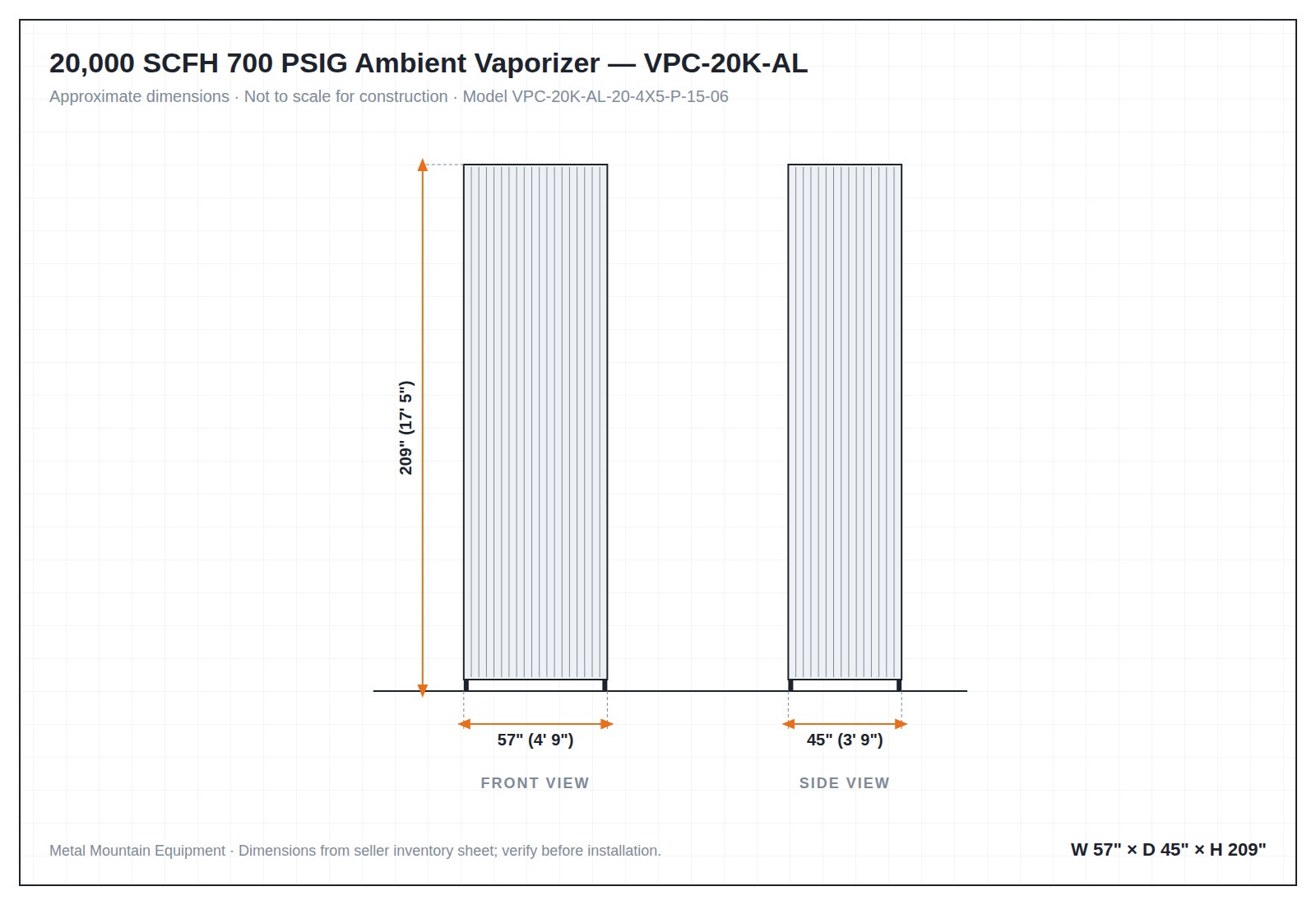
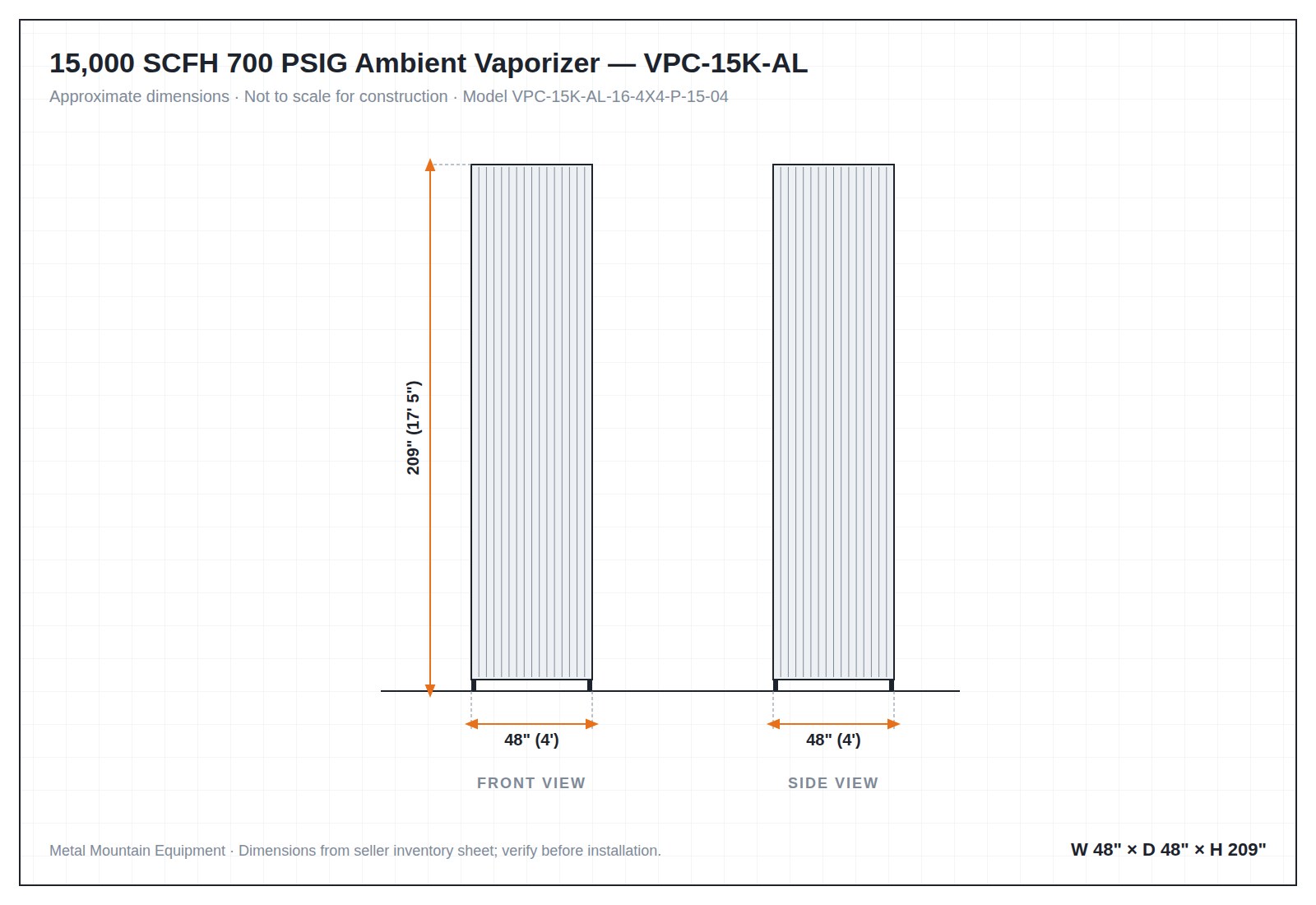
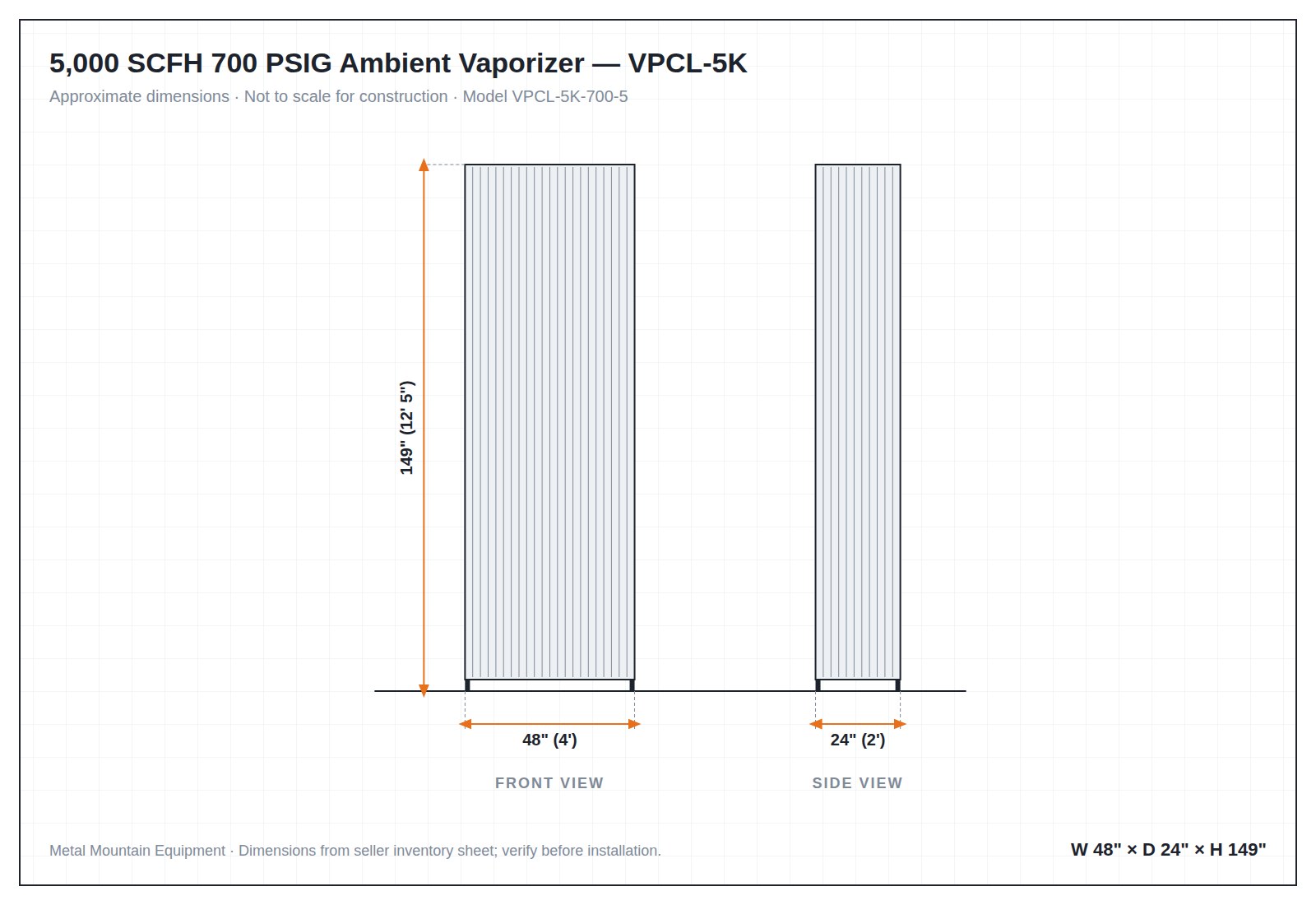
Vaporizers convert cryogenic liquid into usable gas at the pressure and flow your process demands. The right unit depends on three things: required flow in SCFH, delivery pressure, and how much heat your site can supply — ambient air is free but climate-dependent, while water bath, steam and electric units deliver consistent output regardless of weather.
Worth checking
Match the vaporizer to peak demand, not average. Undersized units frost over and starve the process; oversized ambient units simply cost more upfront.
Narrow by type
86 listings available
Browse all equipment →
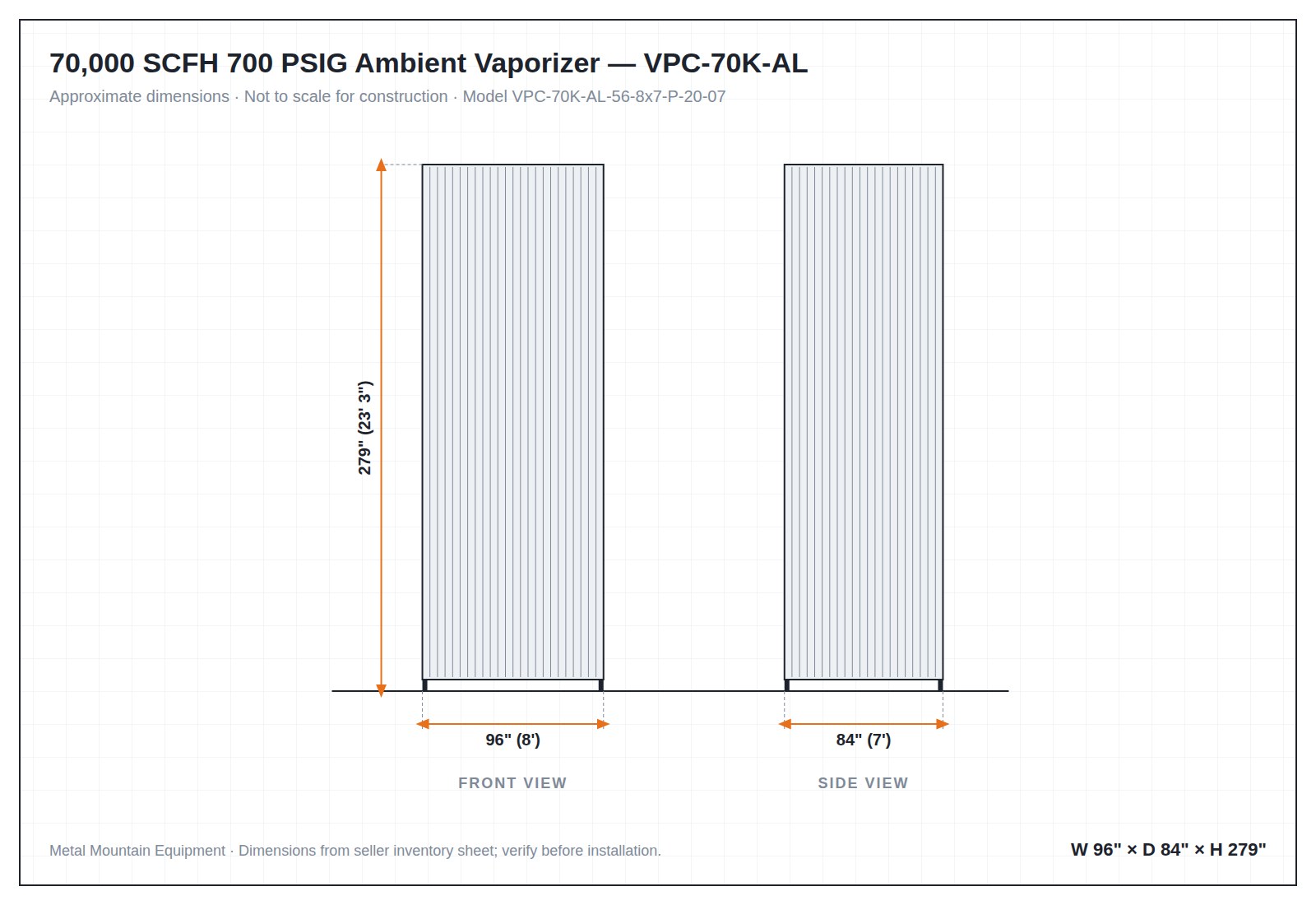
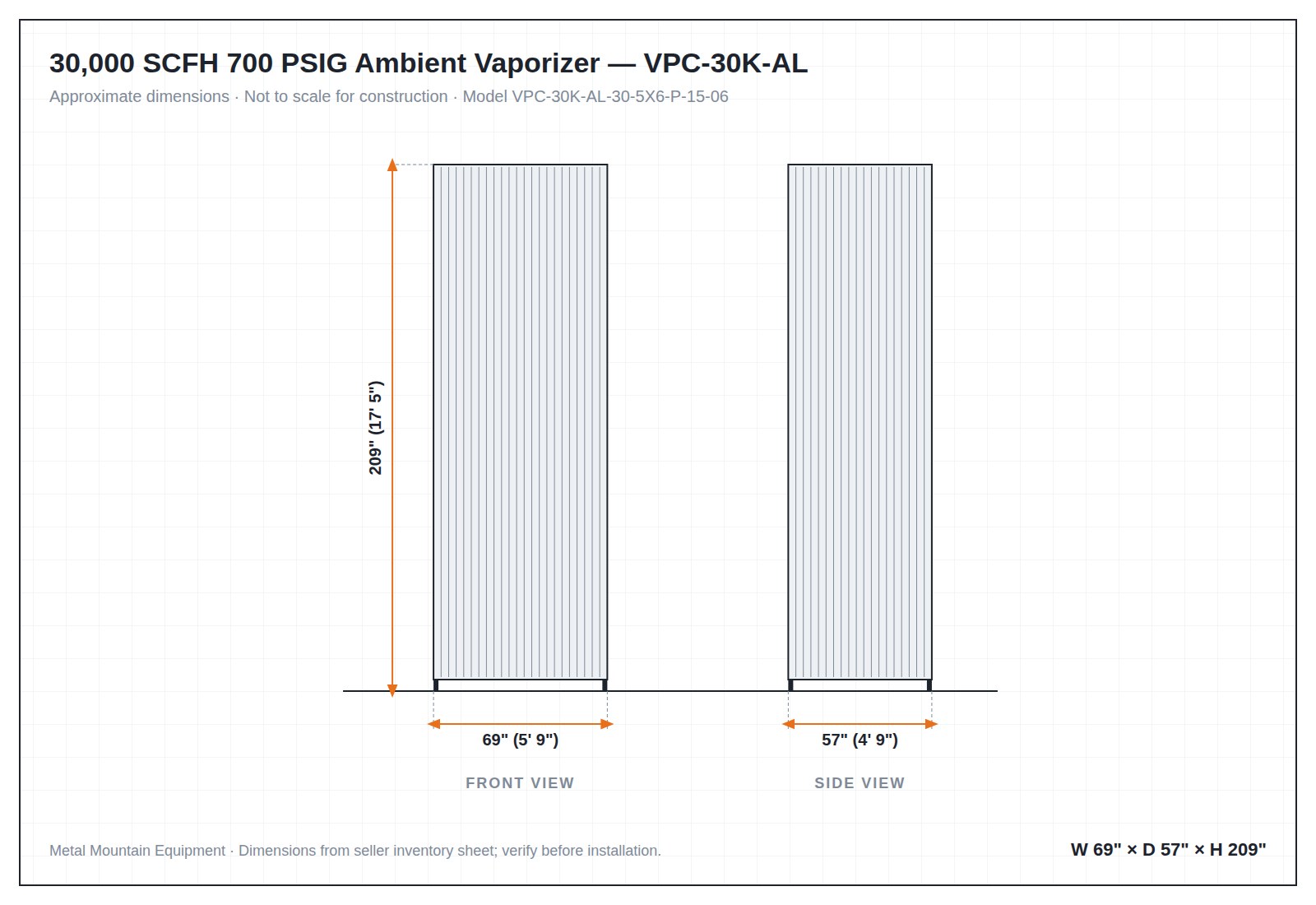
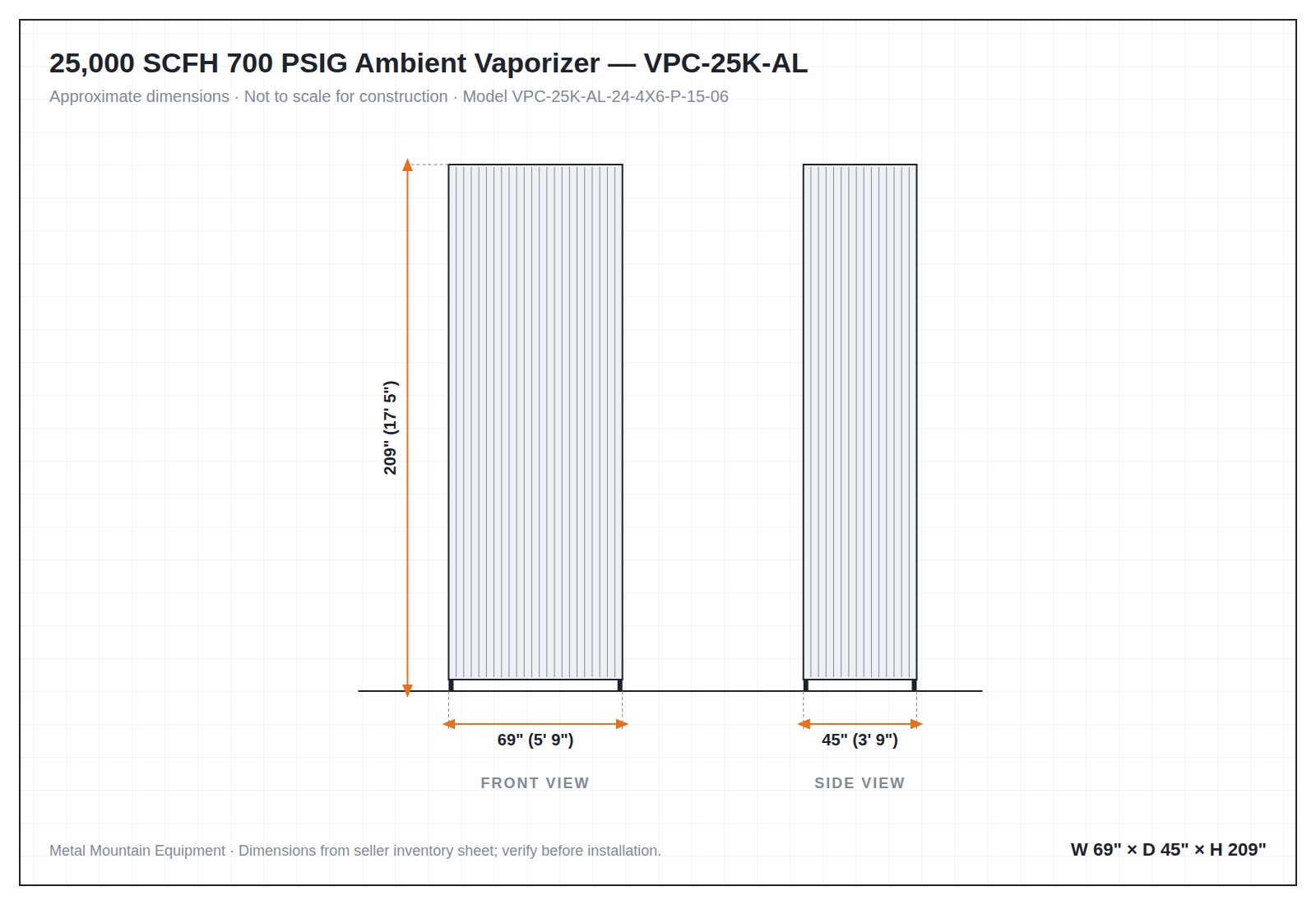


Frequently Asked Questions
Cryogenic Vaporizers questions
Cryogenic Vaporizers basics
What does a cryogenic vaporizer do?
It's a heat exchanger that turns very cold liquefied gas into gas that downstream equipment can use. It's typically used for liquid nitrogen, oxygen, argon and LNG. Liquid CO2 is vaporized the same way, though at about -70°F it isn't technically a true cryogen.
Sources: EIGA Doc 133 · Thermax Mega-fin CO2 brochure
What's the difference between ambient, fan-assisted, water bath, steam and electric vaporizers?
Where the heat comes from. Ambient units draw it from the surrounding air at no energy cost. Fan-assisted units blow air across the fins and lose capacity if the fan stops. Water bath units heat a bath with electricity, steam or a burner, and the stored heat helps keep operation steady. Steam units condense steam directly on the product tubes. Electric units use heating elements, often in a metal block, and are a common choice for CO2 in cold climates or indoors.
Sources: AIGA 027/24 · Chart vaporizers · Thermax Mega-fin brochure
What are trim heaters and pressure builders?
A trim heater is an electric gas heater placed after an ambient vaporizer. It raises outlet gas to a set minimum temperature when the ambient unit can't do it alone. A pressure builder is a small vaporizer that keeps pressure up in a bulk cryogenic tank rather than feeding the process.
Sources: AIGA 027/24 · Chart vaporizers
How is vaporizer capacity rated?
Rated flow assumes specific conditions. For one major ambient line, that means a set ambient temperature, a set humidity and a fixed number of continuous hours between defrosts. Sizing guidance says to design for the worst season, usually cold, dry winter, because ice on the fins cuts heat transfer. Check the rating basis on the plate or datasheet against your climate and duty.
Sources: Thermax SuperGap brochure · Chart: Vaporizer sizing
Buying used cryogenic vaporizers
What should I inspect on a used vaporizer?
On any unit, check for physical damage, signs of leaks, damaged interconnecting tubing and wiring, and blocked instrument vents. On ambient units, look for distortion from heavy ice: repeated partial thaw and refreeze can build dense ice that bends the structure. Lightly bent fins usually don't matter unless they're badly out of position. On heated units, inspect the bath for leaks, the burner or heating elements, and the controls.
Sources: AIGA 027/24 · Thermax Installation & Operating Instructions
What typically goes wrong with each type?
Ambient units: heavy icing from running past design flow or without a chance to defrost, or a stuck changeover valve on switching systems. Fan units: fan or defrost-heater failures. Water bath units: low water from leaks or open drains, loss of steam supply, or burner and fuel problems. Electric units and trim heaters: power or switchgear faults, or burned-out elements.
Source: AIGA 027/24
Why does outlet low-temperature protection matter?
If a vaporizer is overdrawn, iced up or loses its heat source, very cold fluid can reach downstream piping, and carbon steel can crack suddenly at those temperatures. Industry guidance calls for an outlet temperature sensor that shuts off flow, with the trip and shutoff tested regularly. Ask whether a used unit's protection is included and when it was last tested.
Sources: EIGA Doc 133 · AIGA 027/24
What paperwork should come with a used vaporizer?
At minimum, you want a readable nameplate and the manufacturer's datasheet showing the design code, pressure rating and capacity basis. Any part built as an ASME Section VIII vessel should have a U-1A data report, and a National Board number on the plate links it to the filed report. Many ambient units are built to the ASME B31.3 piping code instead, so ask the manufacturer for design and test records.
Sources: ASME Form U-1A · National Board NB-264 · Thermax SuperGap brochure
Can a used vaporizer be moved to a different gas service?
It depends on the manufacturer, so contact them before changing service. Oxygen service needs equipment cleaned of oils, greases and other contaminants that could ignite. Equipment used in other services shouldn't go into oxygen without that cleaning. On LNG specifically: that call is ours, not something the source below sets — we treat vaporizers built for LNG as staying in LNG service.
General guidance for this equipment type. Specifications, condition and history vary by unit — ask the seller about the one you're considering.
Industry News
Related news
Browse by gas service
Other categories
Every listing on Metal Mountain shows capacity, pressure rating, condition and location up front, with full specifications and photos on the listing page. Pricing is shown where the seller publishes it; otherwise request pricing and the seller responds directly.
Sizing a system? Use the gas capacity calculator to convert between vessel water volume and gas capacity in SCF for helium, hydrogen, nitrogen, oxygen, argon, air and natural gas.
Selling this kind of equipment?
We move your inventory online — photos, specs and all — usually within a day.
List Your Equipment