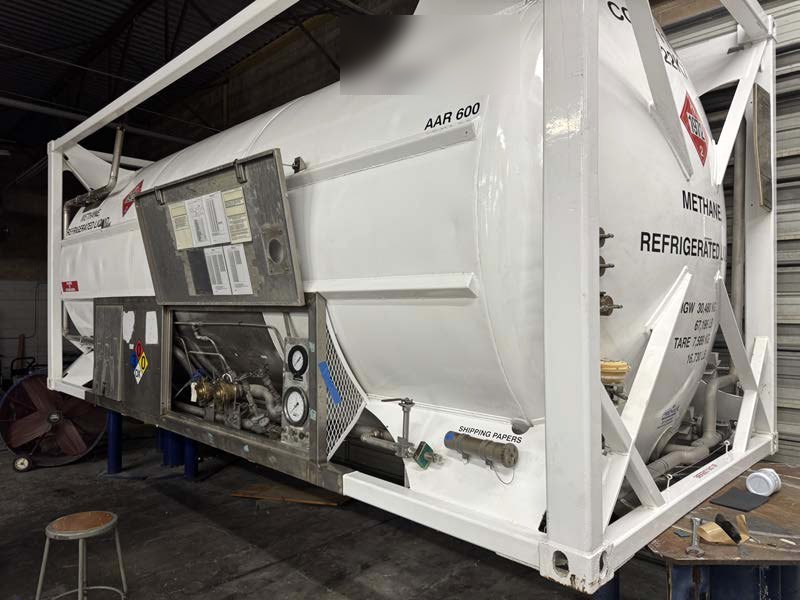
Equipment Rehabilitation
Good equipment with a problem isn't scrap.
We match it with the right shop and get it repaired and back in service — usually for a fraction of new, and sooner.
What do you have?
We know which shops do the best work on which equipment, and what it should cost. Pick what you have below, and we'll handle the rest — one point of contact from the first call to delivery.
Cryogenic Tank Rehab
Frosting, venting fast, or won't hold vacuum? We bring liquid cylinders, dewars and microbulk tanks back to spec for a fraction of new.
- Vacuum restored and verified
- Valves, regulators and gauges replaced
- Cleaned, tested and refinished
Bulk Tanks & Pressure Vessels
Tired paint, leaking valves or a failed test doesn't mean you need a new tank.
- Code repairs by R-stamp holders
- Re-piped, re-valved, vacuum restored
- Blasted, coated and inspected
Transport Trailers & ISOs
Cryogenic trailers, tube trailers, MEGCs and ISO containers — back in test and back on the road.
- DOT and Transport Canada retest
- Tank, piping and coil repairs
- Brakes, axles, air ride and lights
Piping & Plant
The piping and plant equipment that moves product from the tank to where it's used.
- Vacuum-jacketed pipe built or repaired
- Manifolds and process piping
- Gas mixers and CO2 units serviced
Compressors
Worn out, down on output, or won't start? Rebuild it before you replace it.
- Rebuilds and overhauls
- Valves, rings and seals replaced
- Run-tested before it goes back
Cryogenic Pumps
Losing prime, short on flow, or leaking at the seals?
- Rebuilds and overhauls
- Seals, bearings and pistons replaced
- Tested before it goes back
How it works
- 1
Tell us what you have
What it is, where it is and what's wrong. A photo of the data plate helps most.
- 2
We match the right shop
You get a clear scope, price, turnaround and warranty before any work starts.
- 3
Back in service
Pickup, repair, testing and delivery handled — you deal with one person the whole way.
Get a rehab quote
Two quick questions and a few details. We'll come back with next steps and a realistic idea of cost.
Frequently Asked Questions
Rehabbing cryogenic tanks and high-pressure vessels
Cryogenic Storage Tanks & Liquid Cylinders
My cryogenic tank or liquid cylinder lost vacuum. Can that be fixed?
Usually, yes. The leak is found with helium leak testing, the space between the inner and outer vessel is dried and pumped back down, and the vacuum is verified before it goes back. Just pumping it down without finding the leak only buys time — we don't do it that way.
My cryogenic tank is frosting, sweating or venting too fast. What does that mean?
Frost or sweating on the outer shell and fast boil-off are the classic signs of lost or degraded vacuum. It can also be a stuck or leaking relief valve or economizer. Send us what you're seeing and the last vacuum reading if you have one, and we'll tell you what it likely is before anything is shipped.
Can a cryogenic tank be converted to a different gas?
Sometimes. Moving a nitrogen or argon tank to oxygen service, for example, means cleaning for oxygen service plus the right valves, relief devices and labels. Tanks built for LNG stay in LNG service. Tell us what it was used for and what you need, and we'll say whether a conversion makes sense.
High-Pressure Vessels, Tube Trailers & Cylinders
How often do tube trailers and high-pressure cylinders need a DOT retest?
Most high-pressure tubes, including DOT 3AAX tube trailer tubes, must be requalified every 5 years. Some smaller DOT 3AA cylinders in specific gas service can qualify for 10. Retests are done by qualified requalification facilities — we'll check the stamps and tell you where yours stand.
Can a high-pressure vessel be repaired, or does it have to be replaced?
It depends on what it's built to. ASME pressure vessels can be repaired or altered by shops holding a National Board R stamp, with the paperwork to match. DOT tubes and cylinders are different: one that fails its requalification test is condemned, not repaired — but the trailer, valves and manifolds around it often can be.
What else gets done when a tube trailer is rehabbed?
Besides retesting the tubes: valves, manifolds and fittings, the frame and paint, and the running gear — brakes, axles, suspension and lights — so it's ready for the road as well as the test.
Any Rehab Job
Is it worth rehabbing my tank or vessel, or should I just buy new?
When the shell is sound and the paperwork is intact, rehab usually costs well under new and is back in service sooner. When it isn't — a damaged inner vessel, a missing data plate, a unit modified without records — replacing can be the smarter money. We'll tell you which one you have before you spend anything.
How long does a rehab take?
It depends on the equipment and the shop's schedule. Liquid cylinders are typically the quickest; bulk tanks and transport trailers take longer. You'll get a turnaround time in the quote, before any work starts.
Is rehab work warrantied?
Warranties come from the shop doing the work — vacuum warranties are common on cryogenic rehab. The exact terms are in your quote, so you know what's covered before you say yes.
Who actually does the rehab work?
A partner shop matched to your equipment — the one we know does that kind of job best. We handle the scope, pricing, pickup and delivery, so you deal with one point of contact the whole way.
What do you need from me to quote a rehab?
What it is, where it is and what's wrong. A clear photo of the data plate helps more than anything else — make, model, serial, MAWP and year — plus any recent vacuum readings or test dates you have.