Cryogenic Vaporizers
Used Ambient Air Vaporizers for Sale
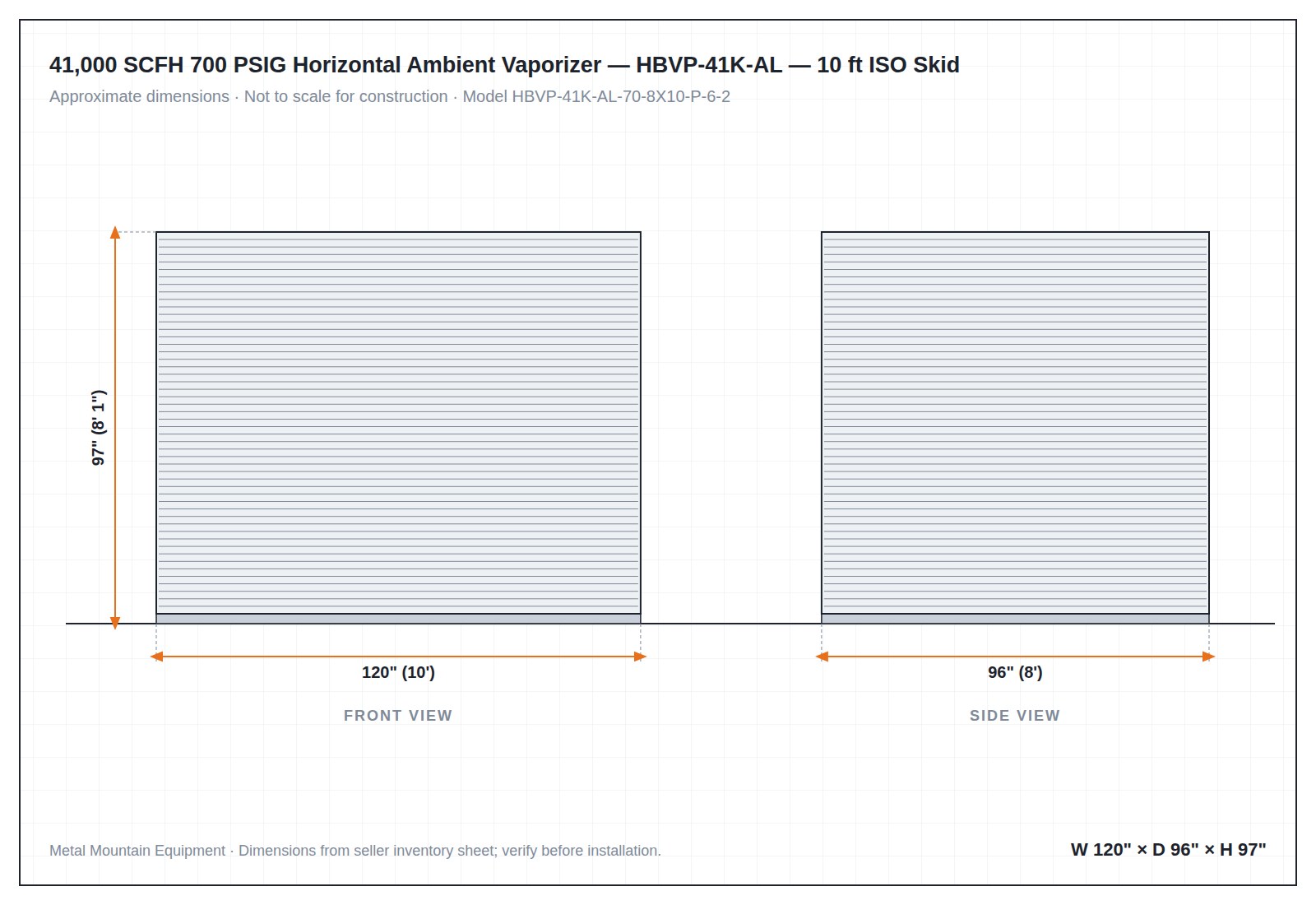
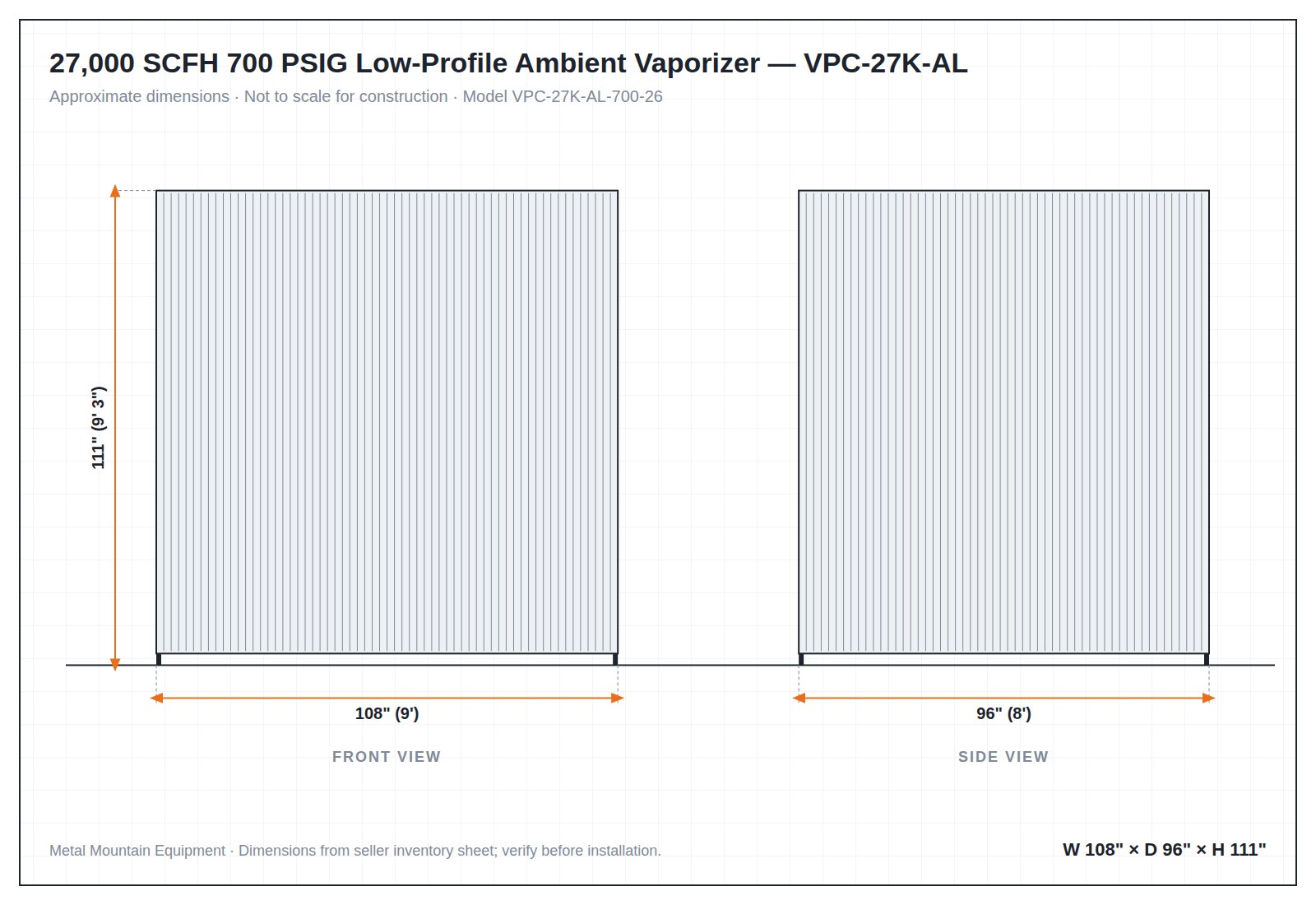
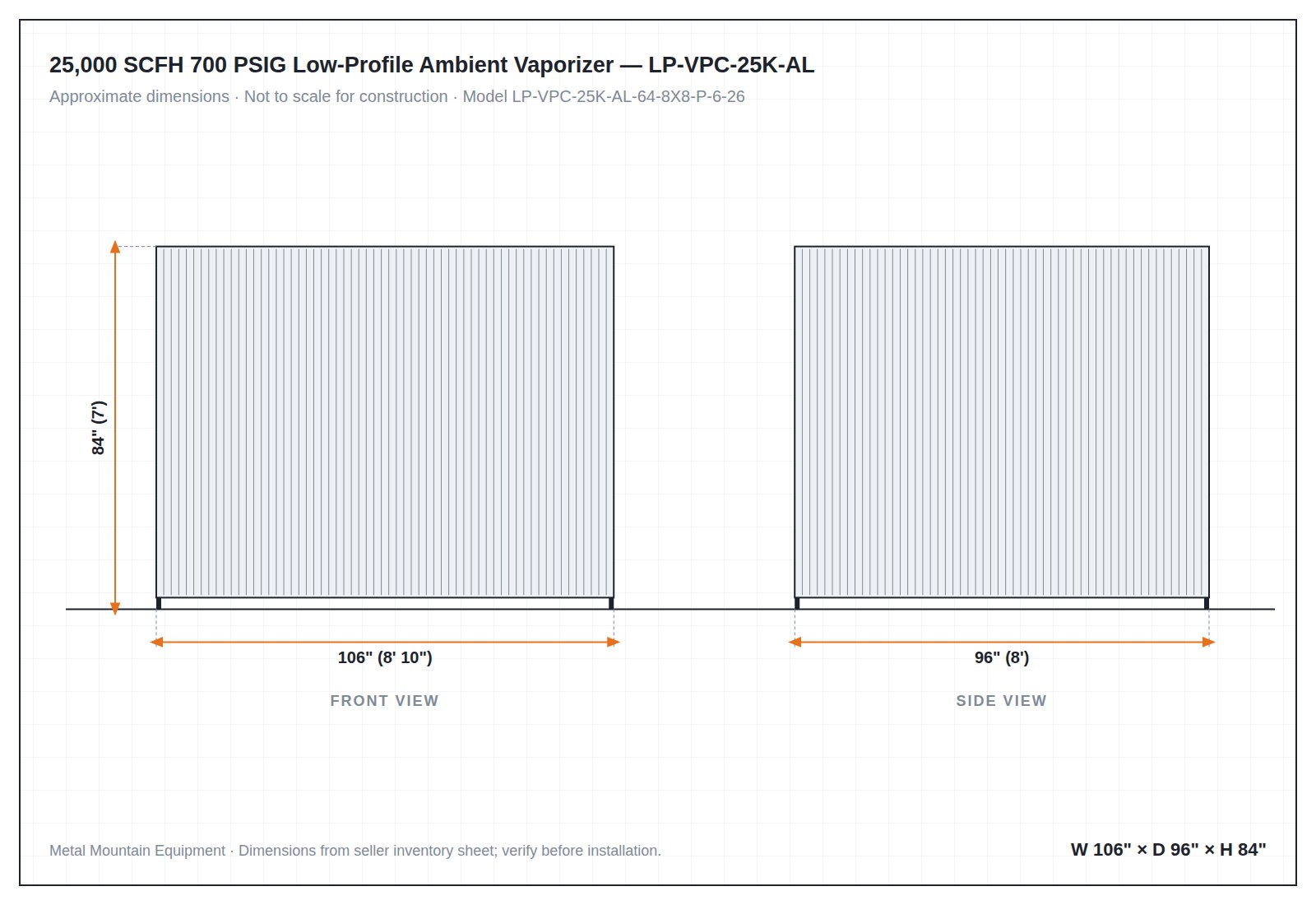
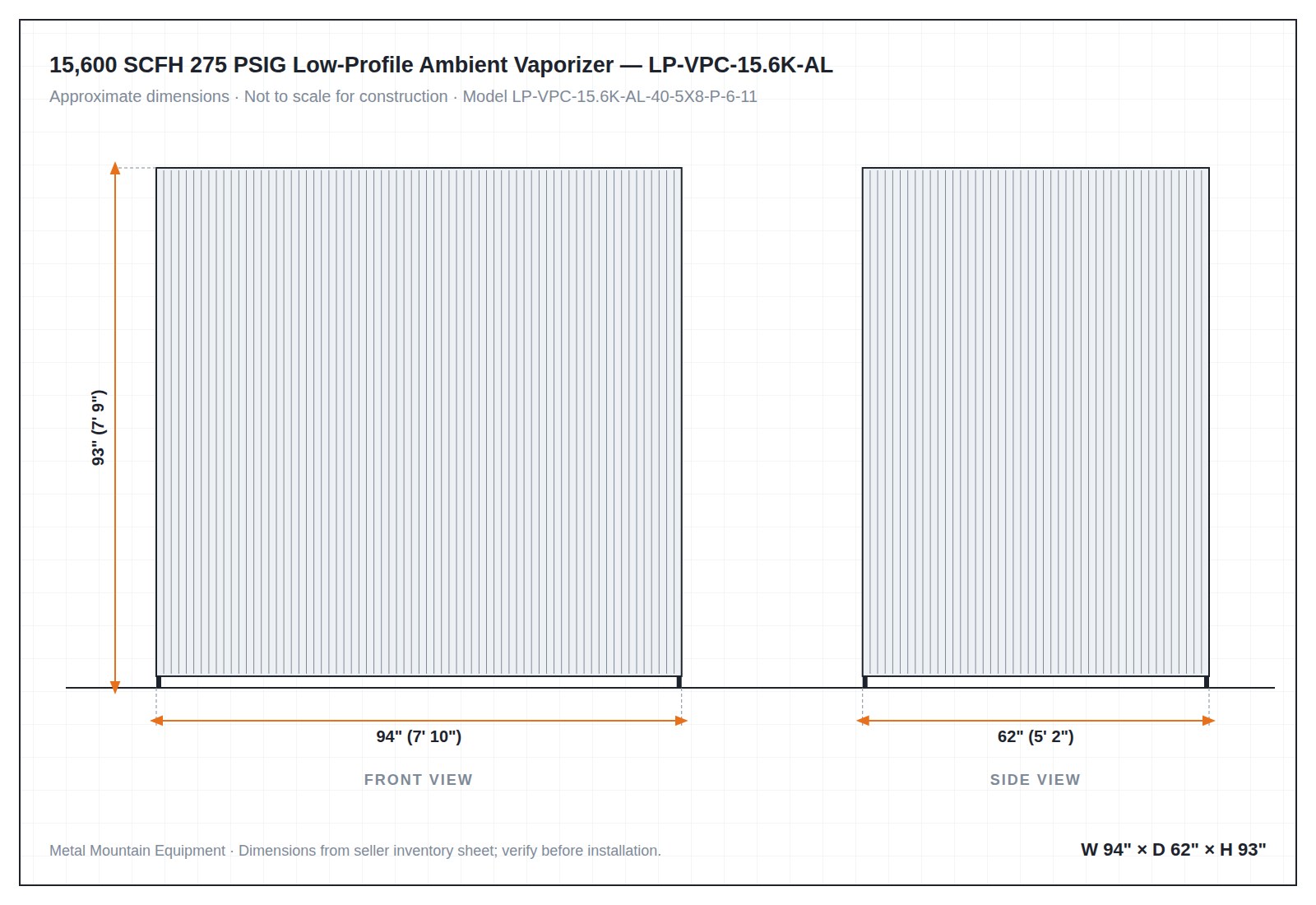
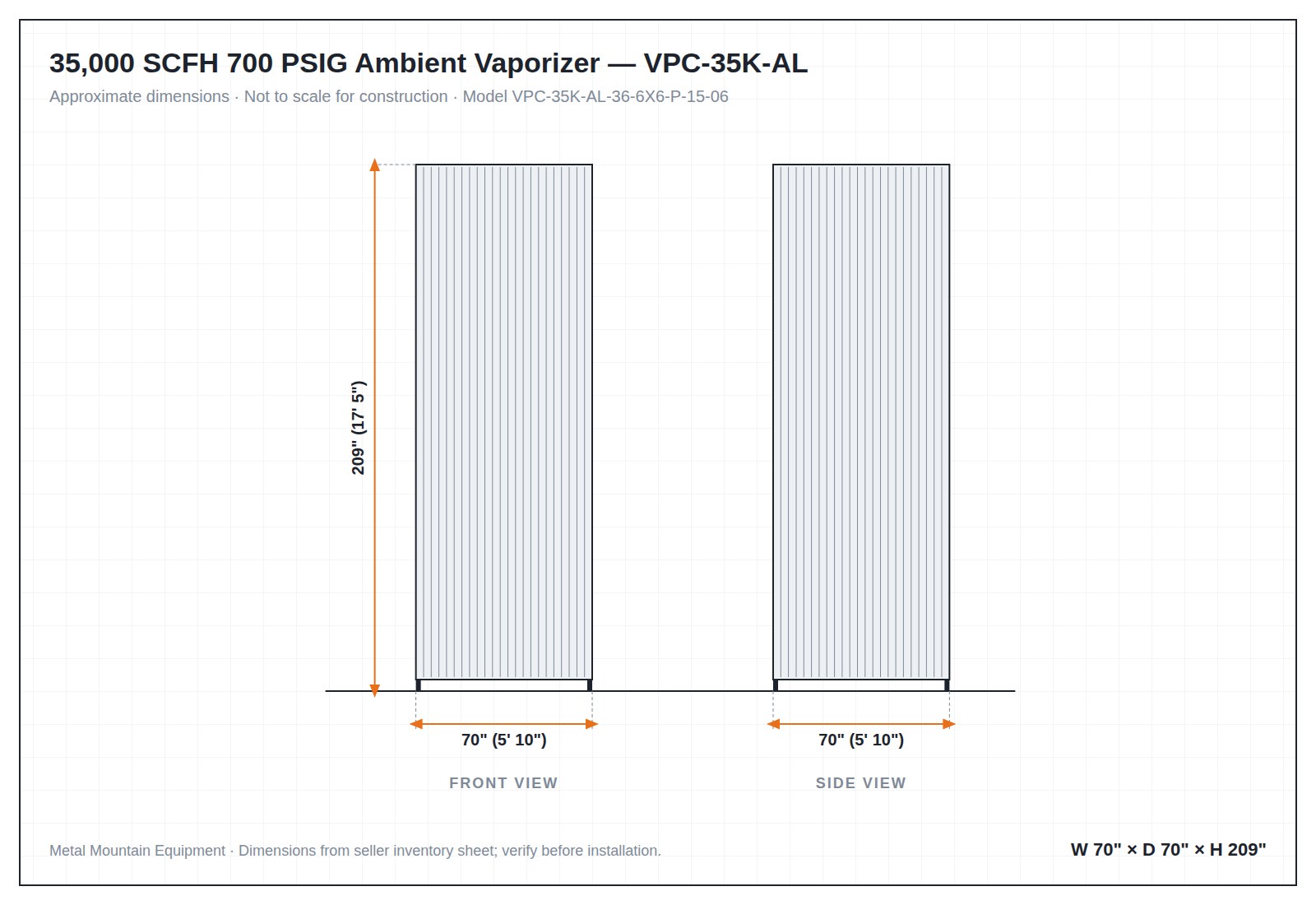
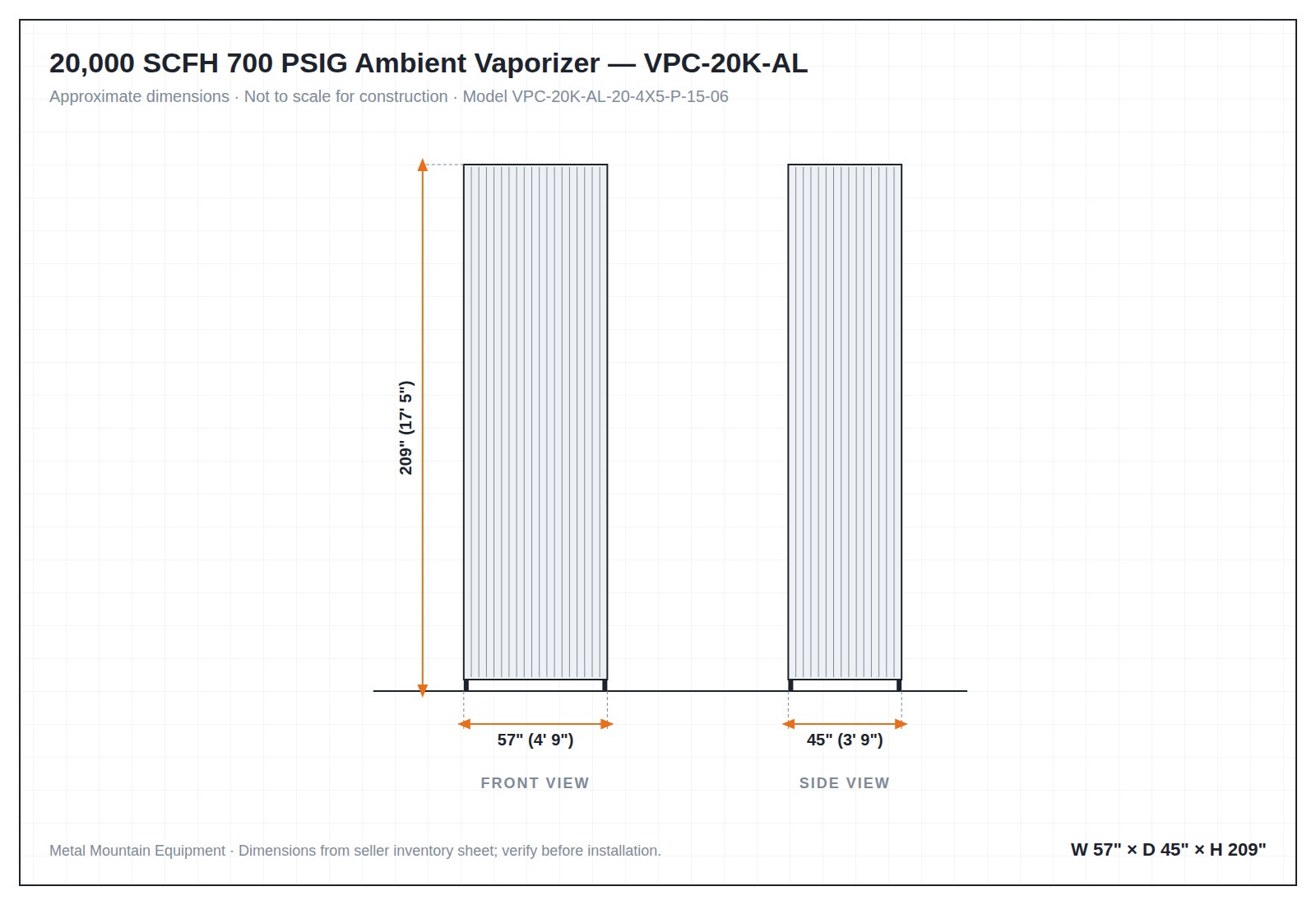
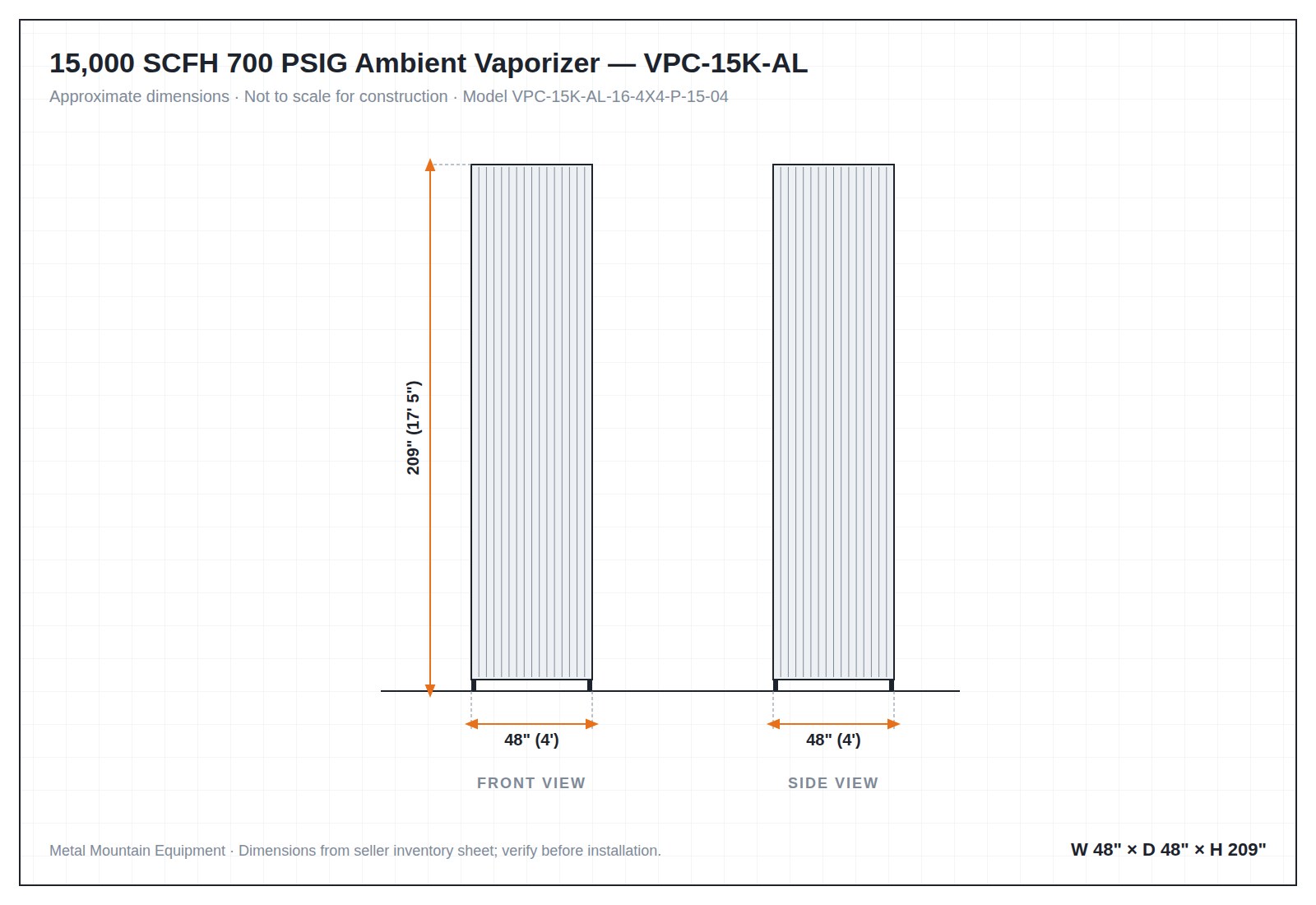
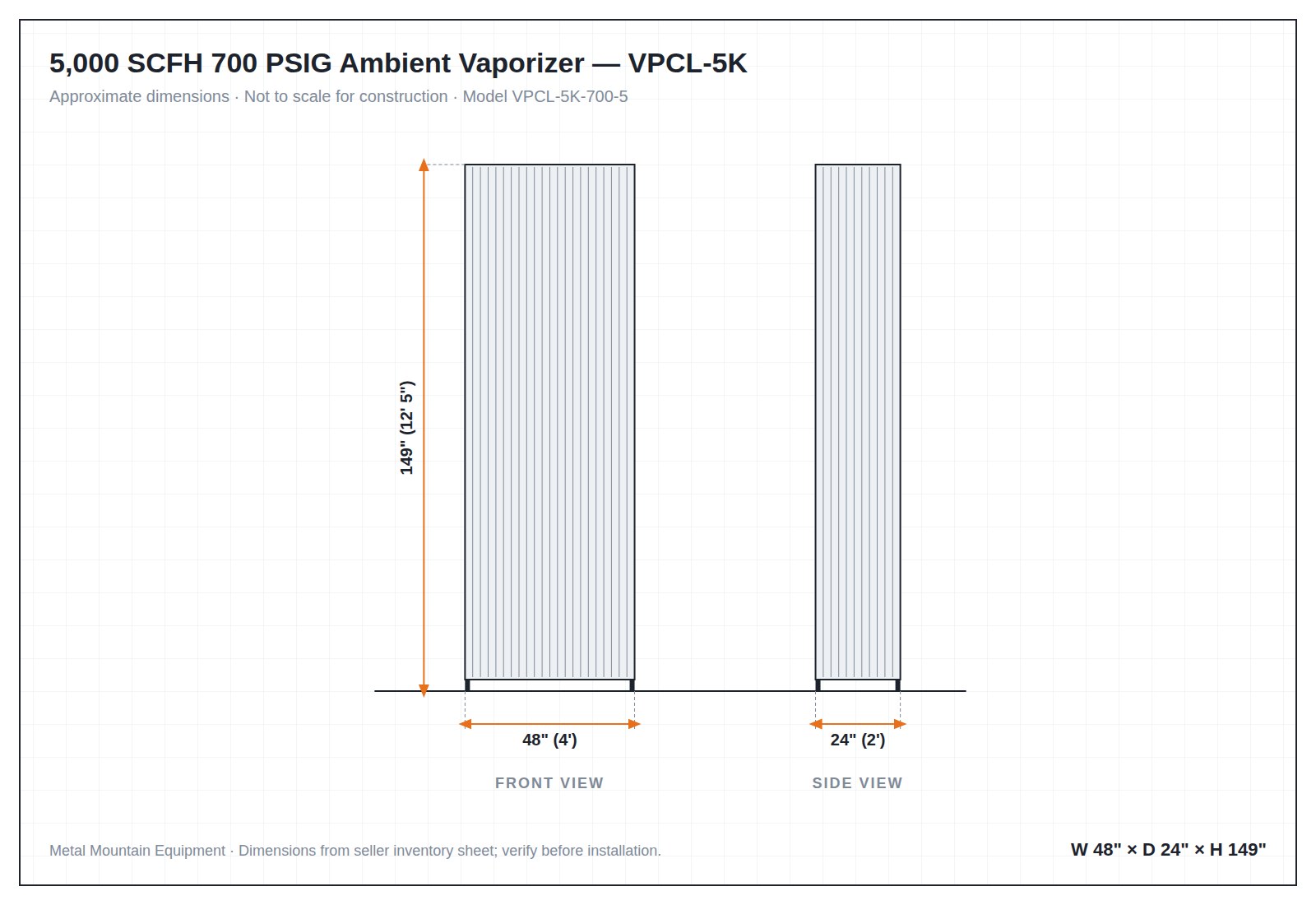
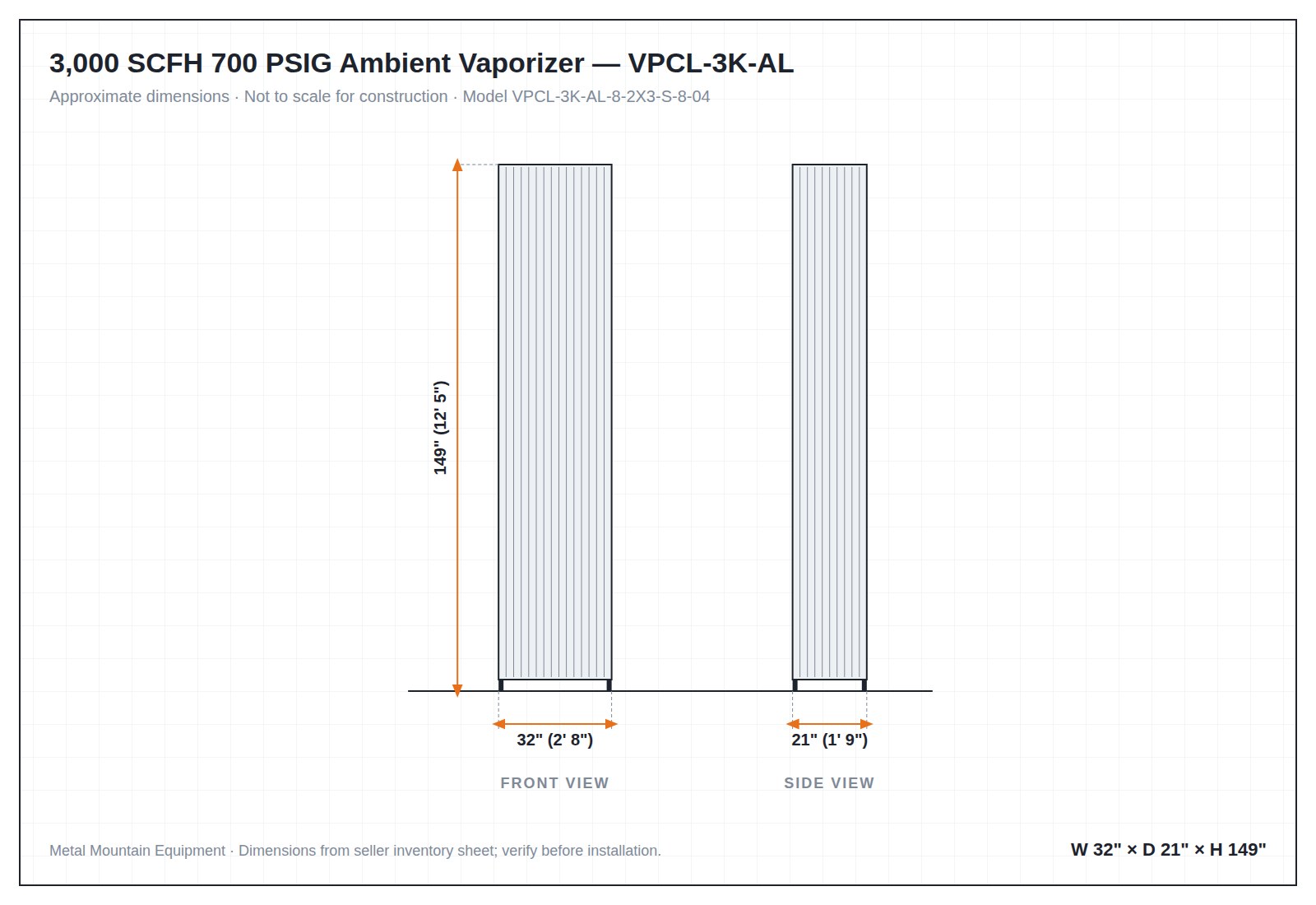
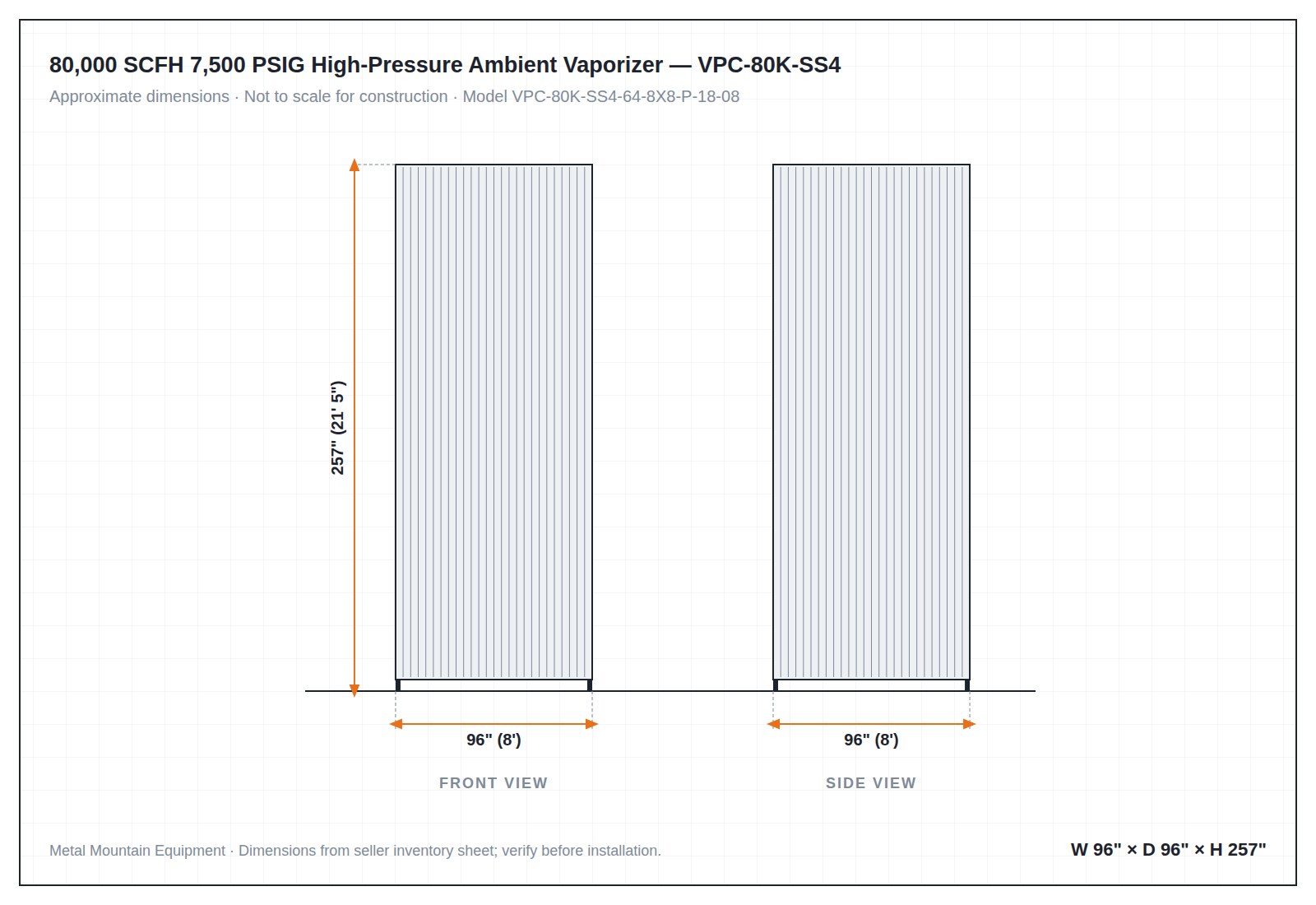
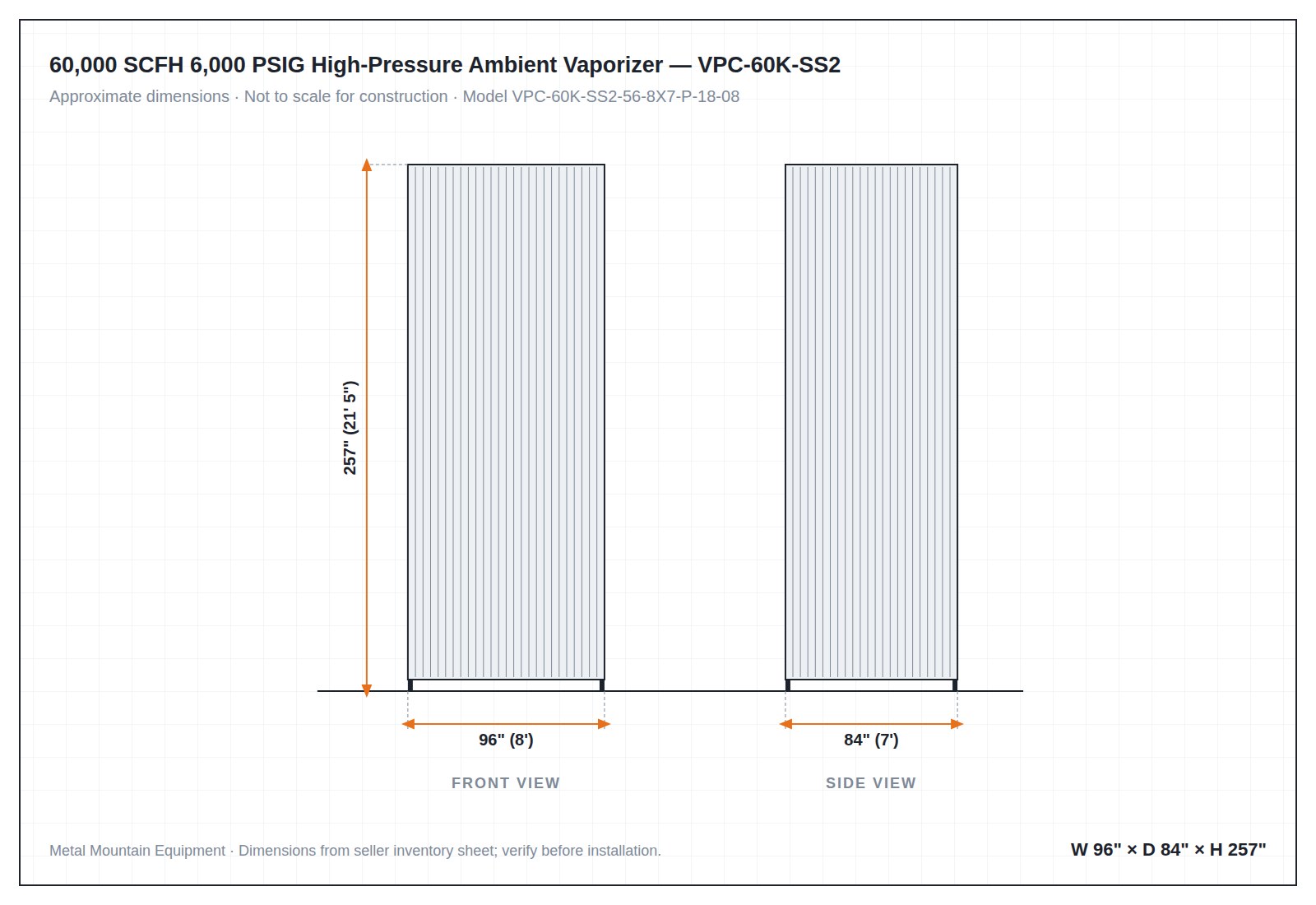
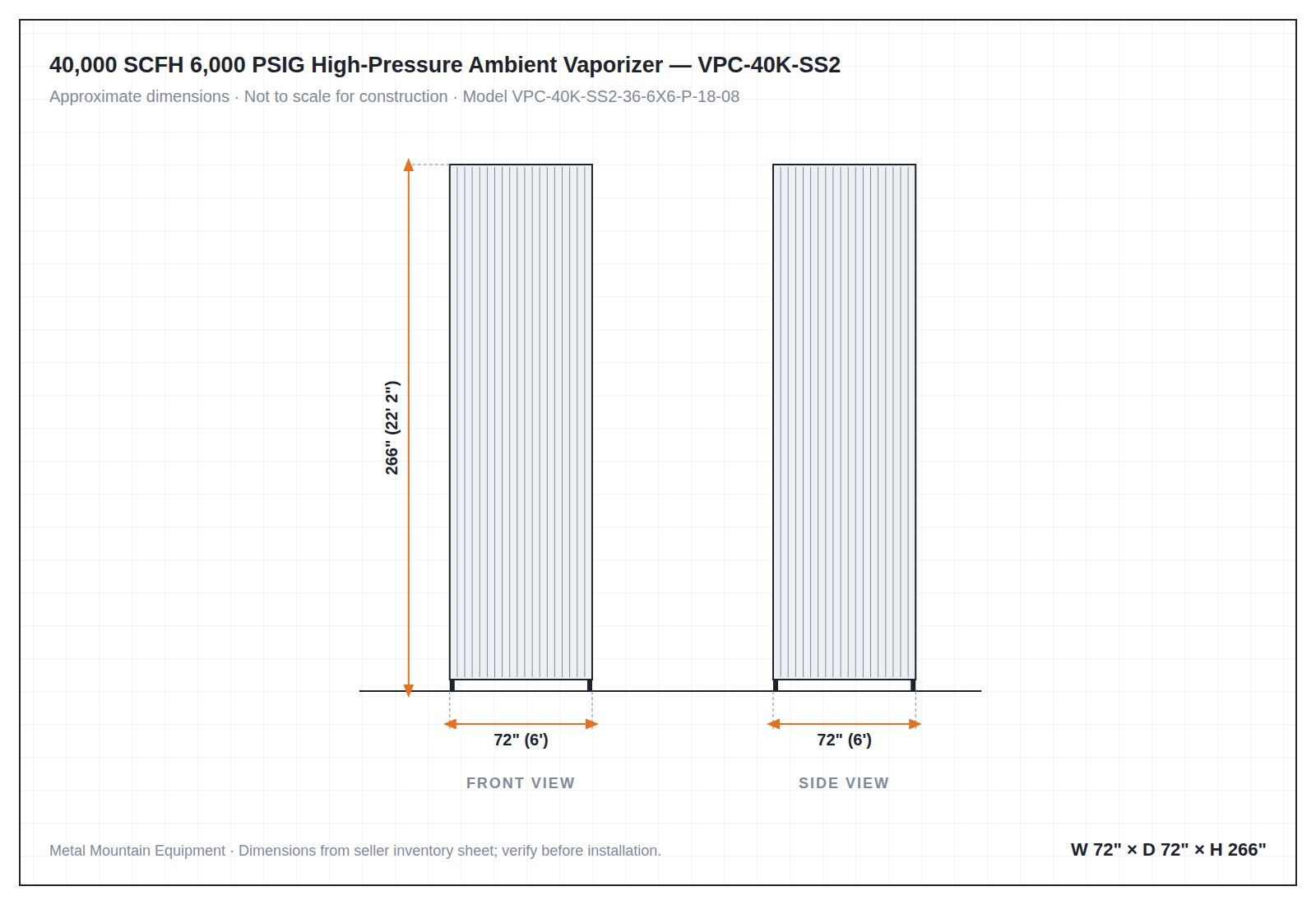
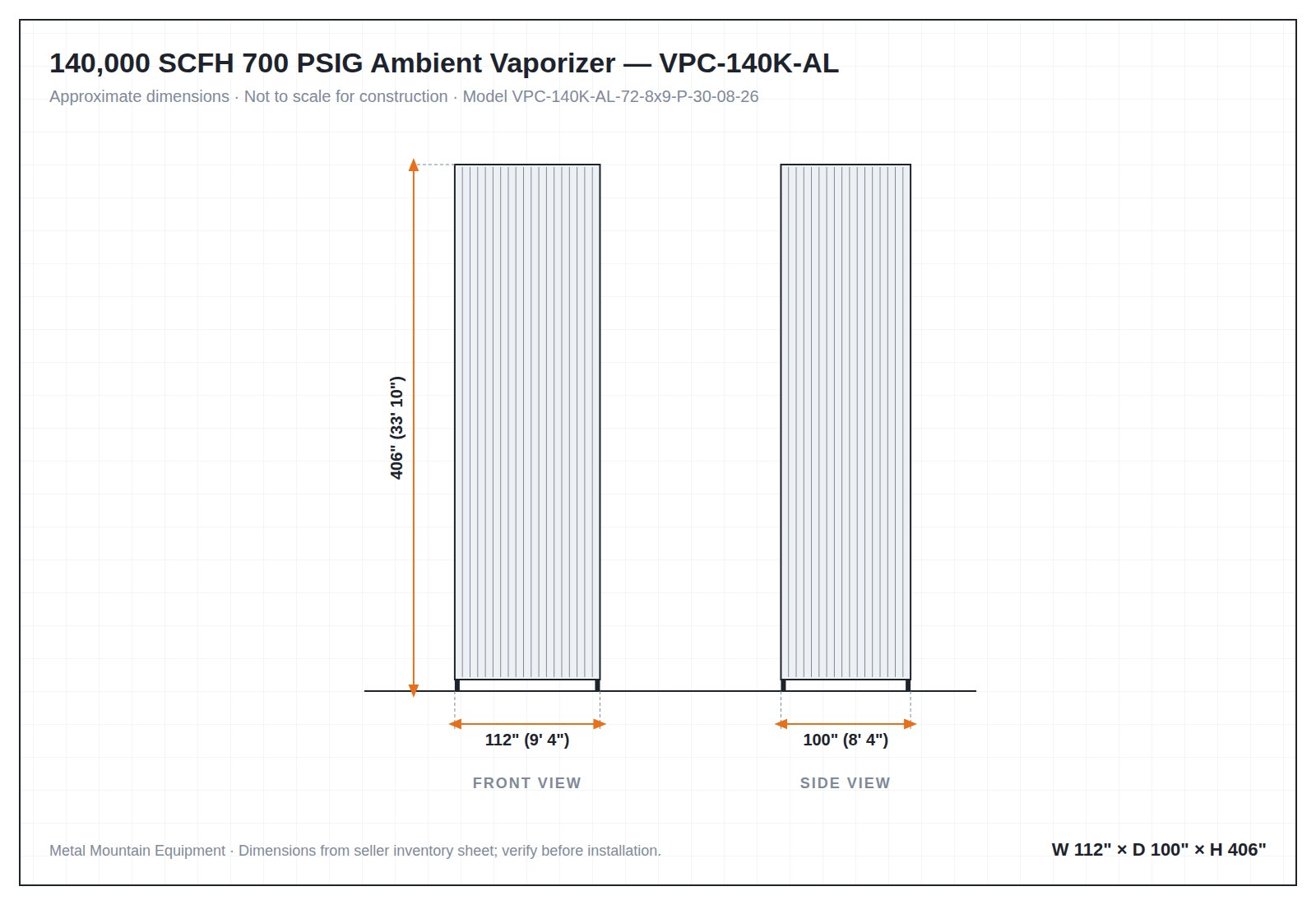
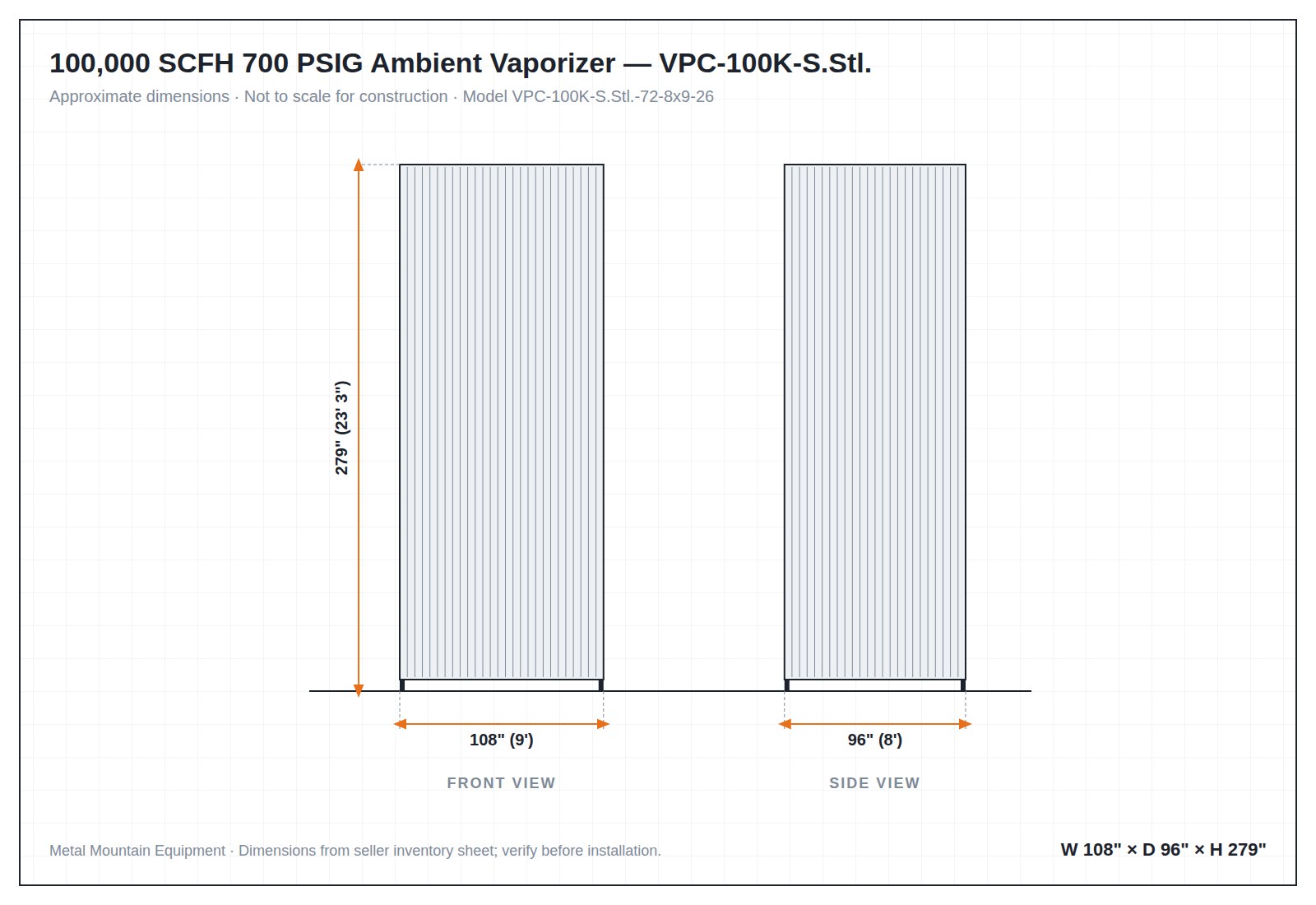
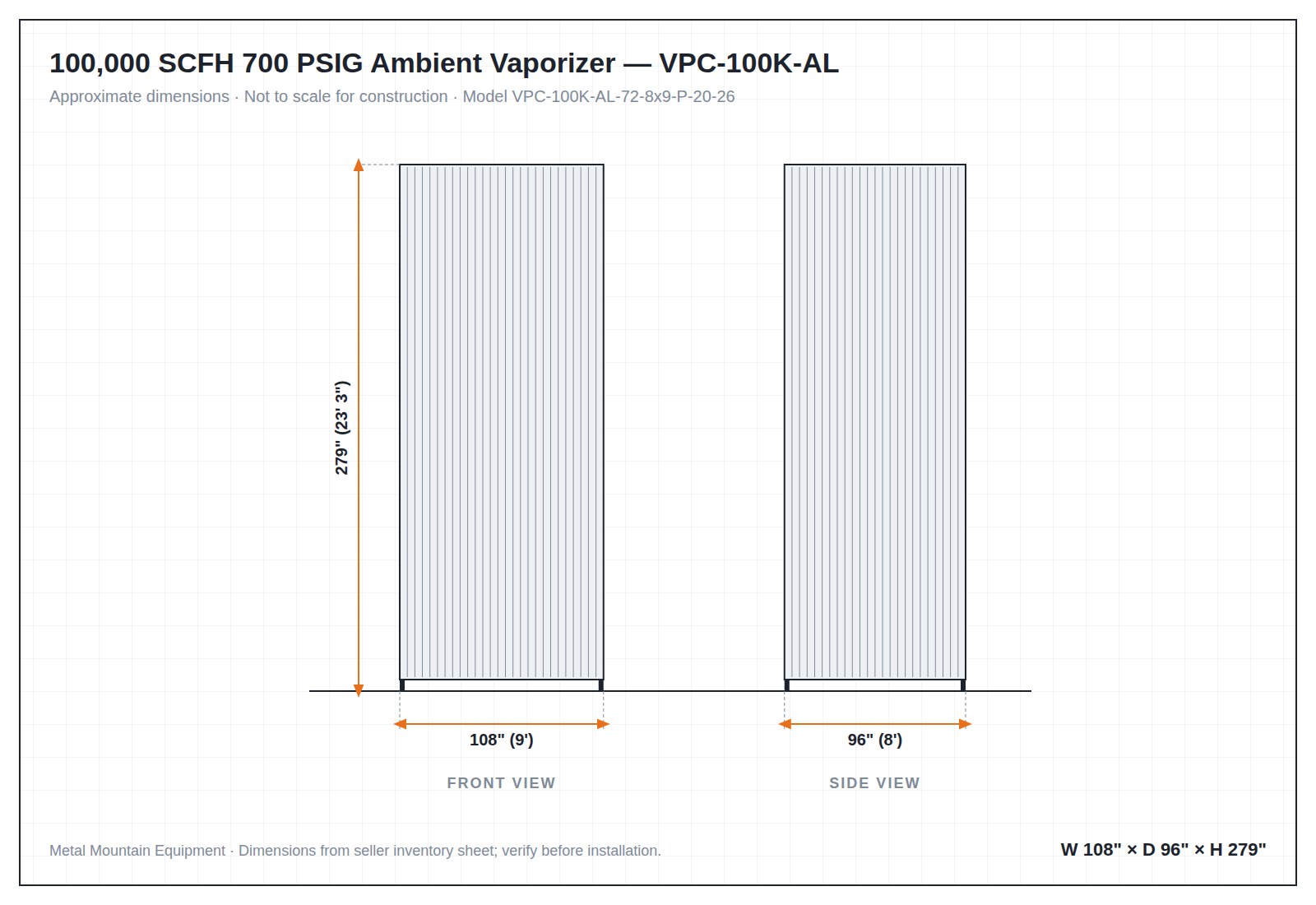
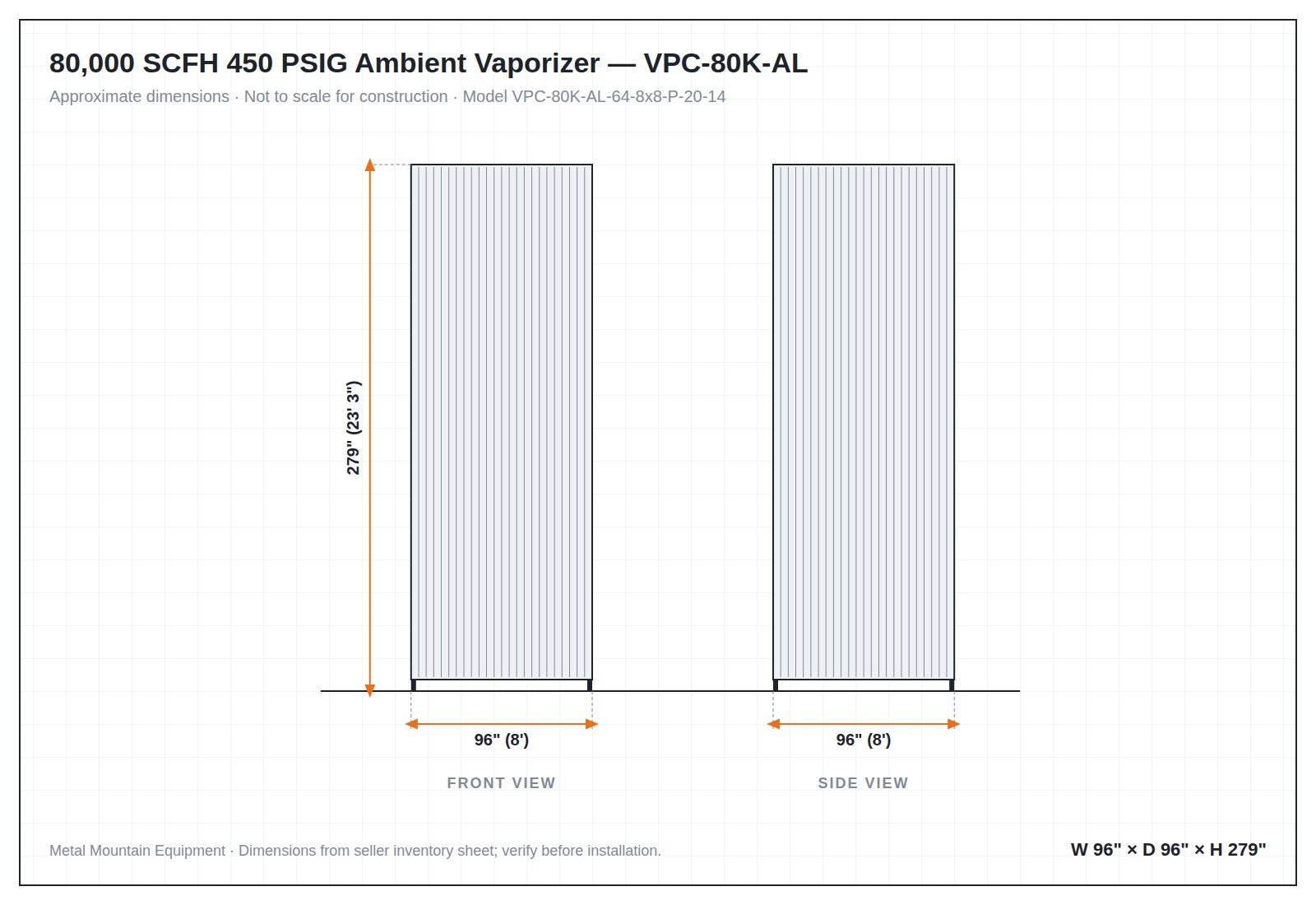
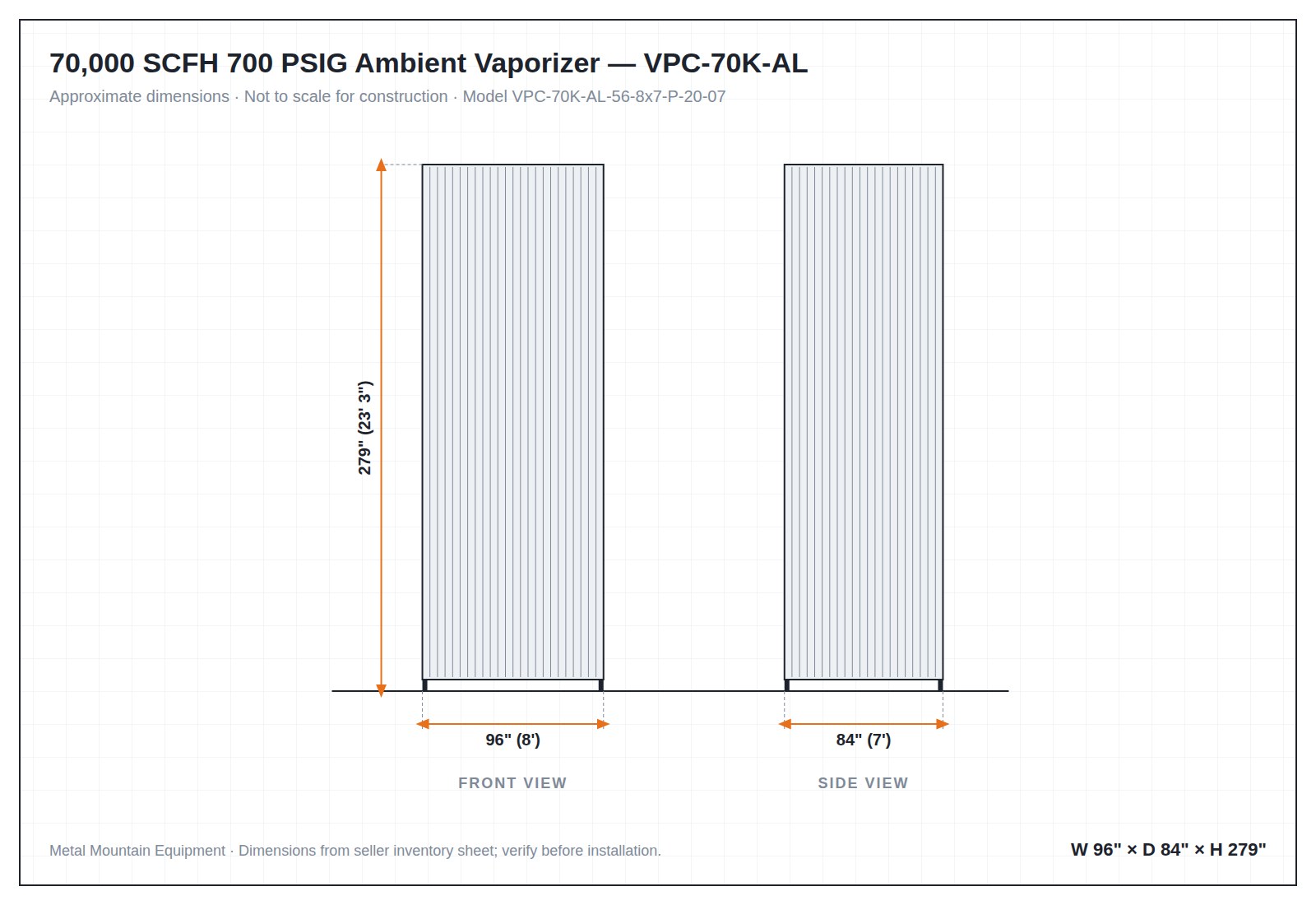
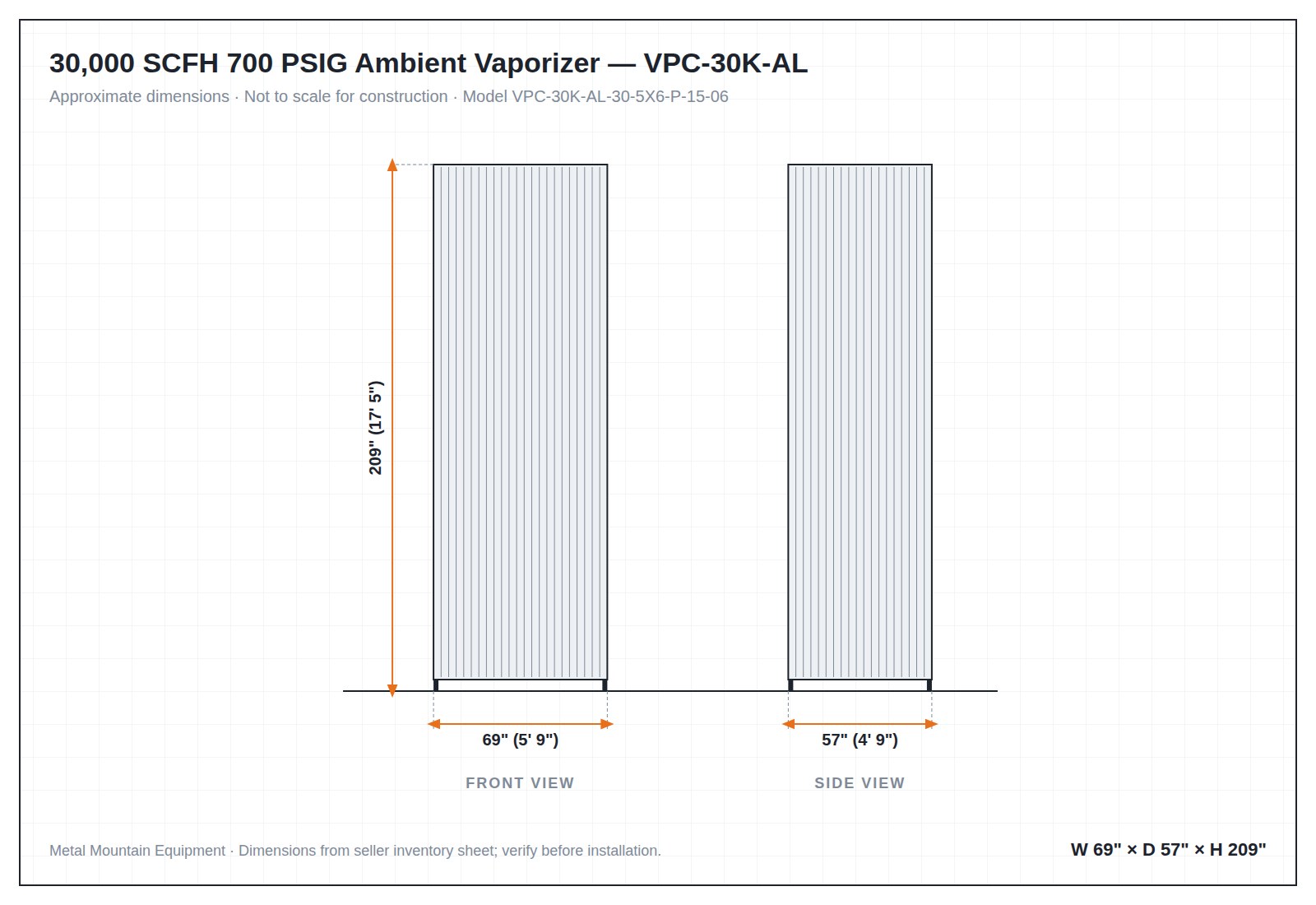
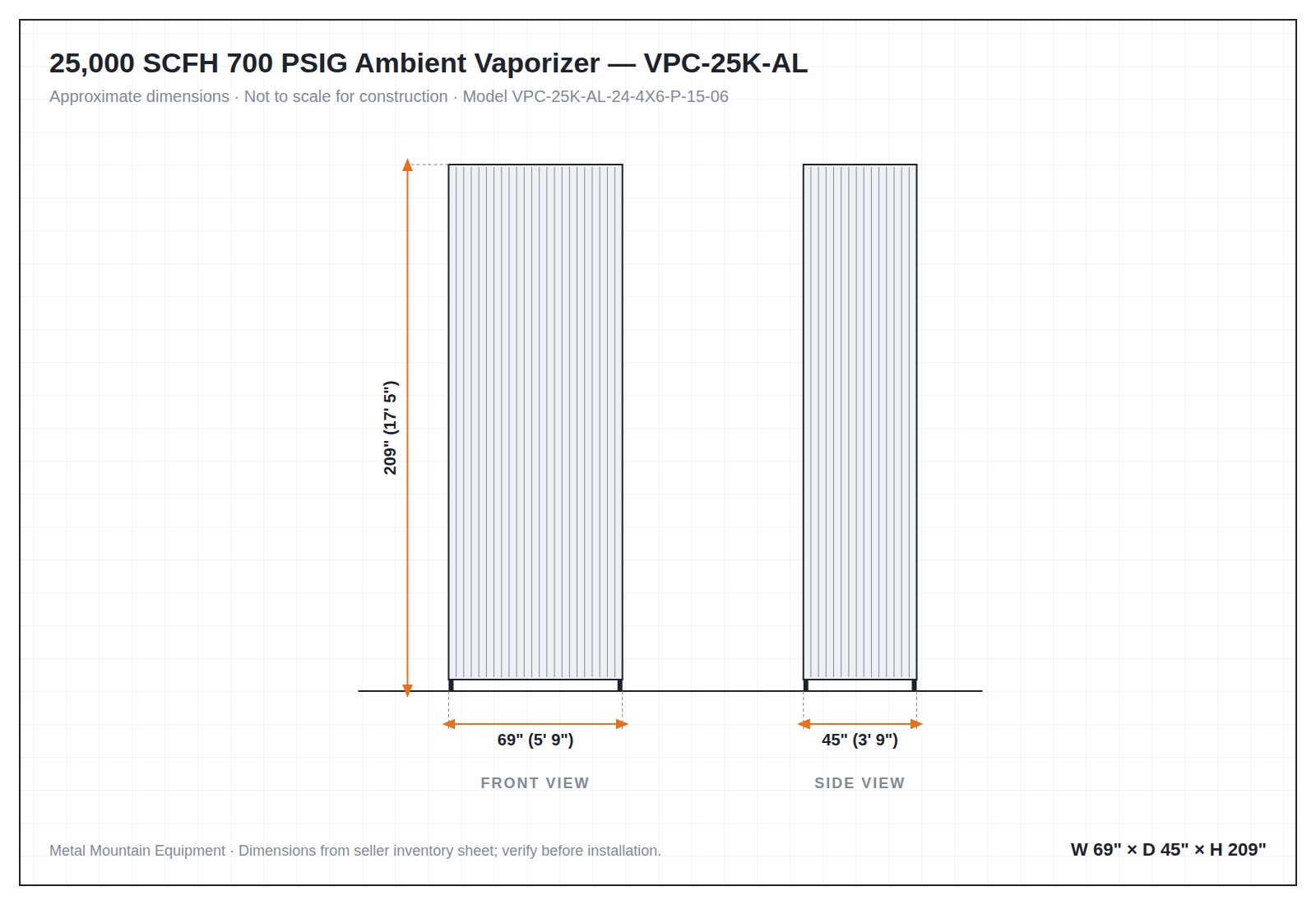
Ambient air vaporizers use atmospheric heat to gasify cryogenic liquid — no fuel, no power, no operating cost. They are the workhorse of industrial gas supply, sized by fin area and rated in SCFH at a given service pressure.
Worth checking
Performance falls in cold, humid conditions and during continuous duty as fins ice up. Sites running 24/7 often alternate paired units.
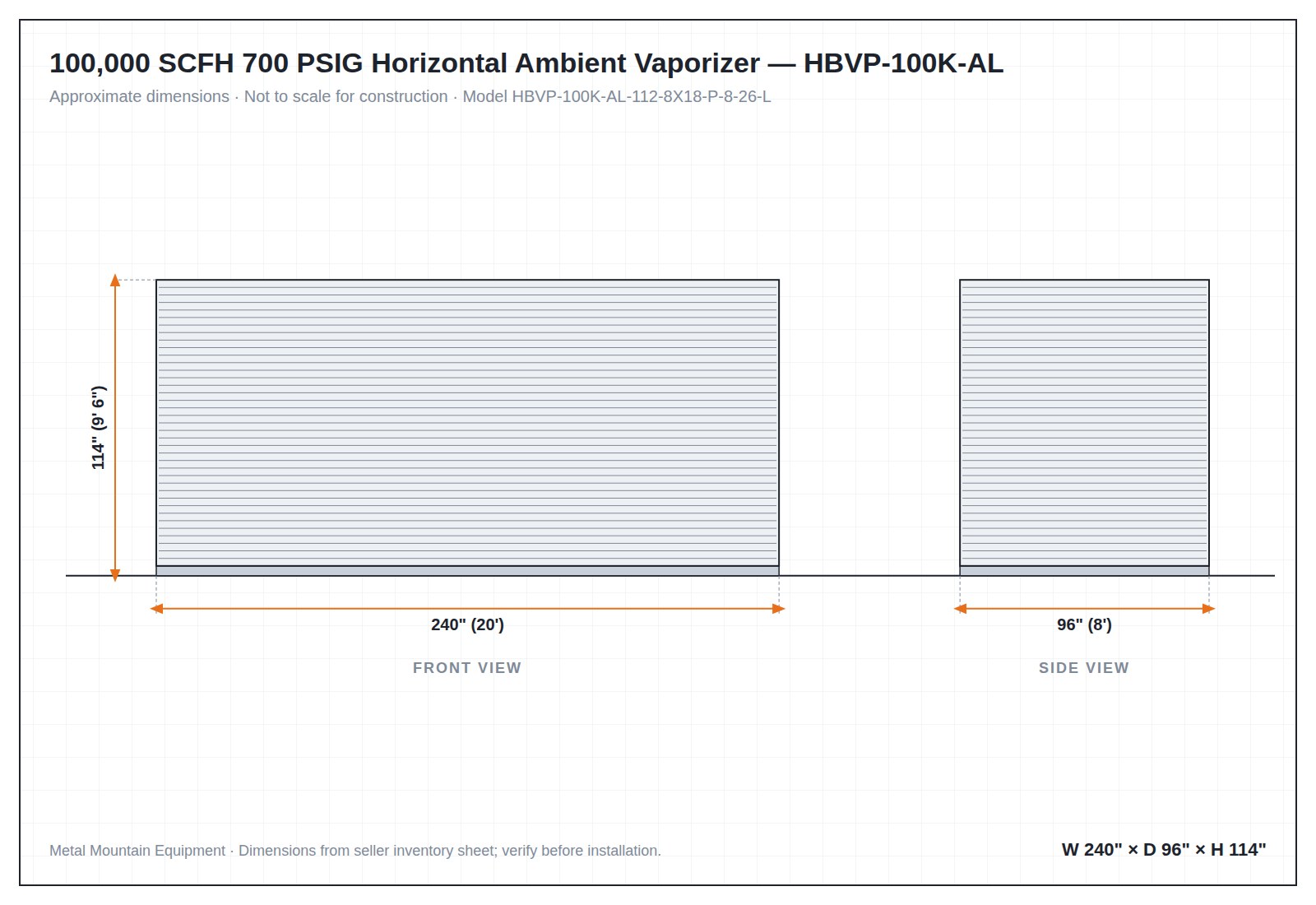
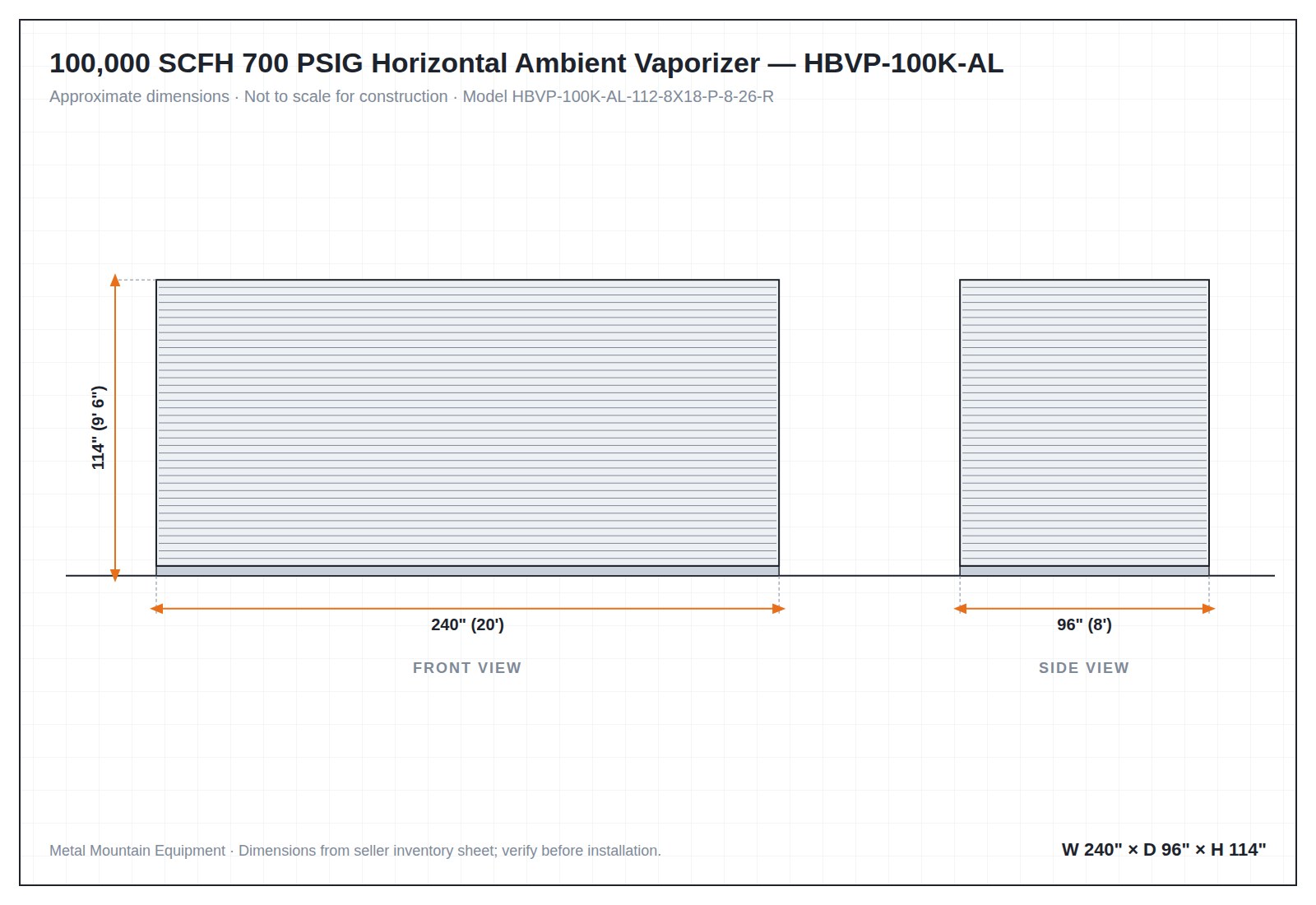
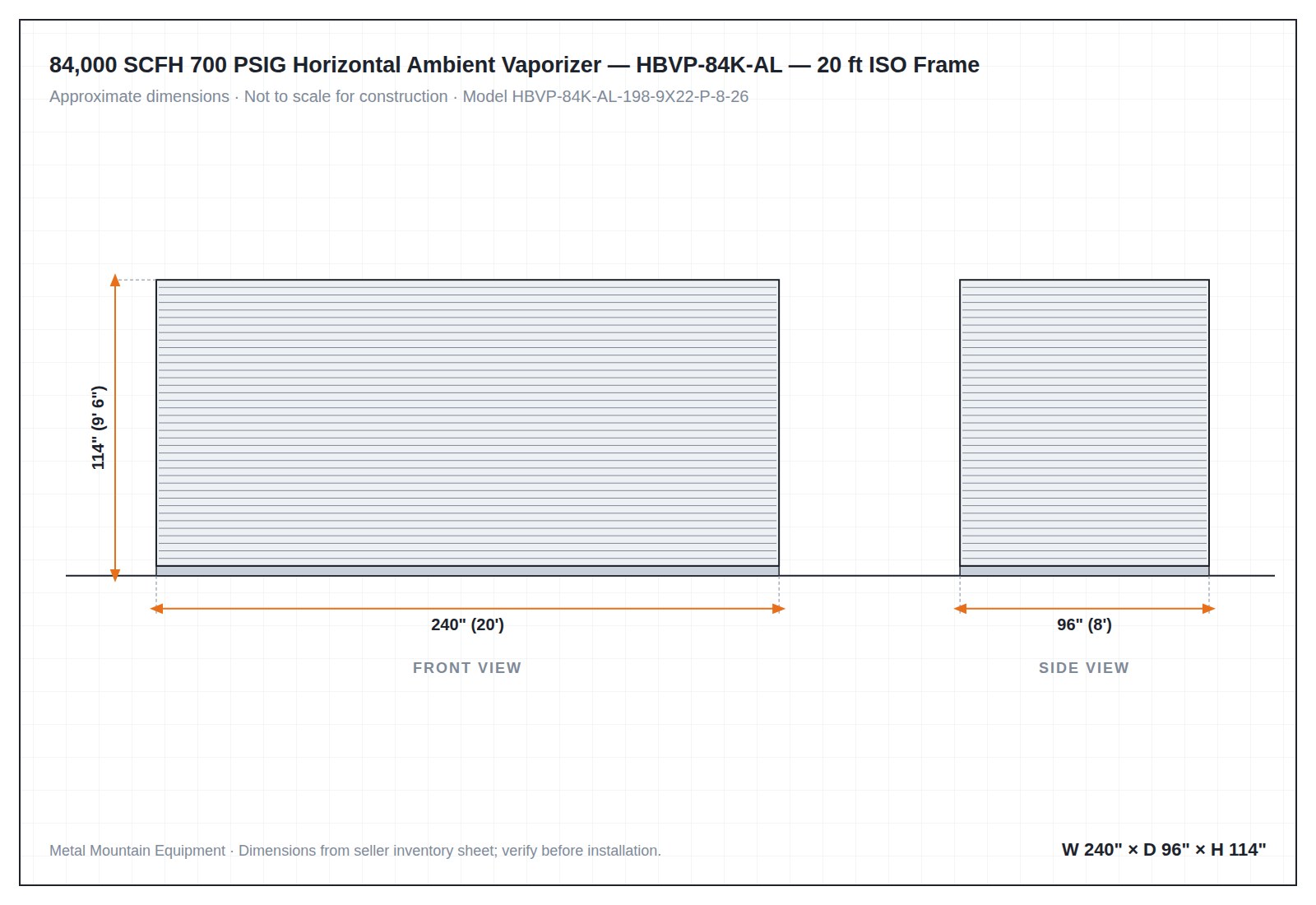
49 listings available
Browse all equipment →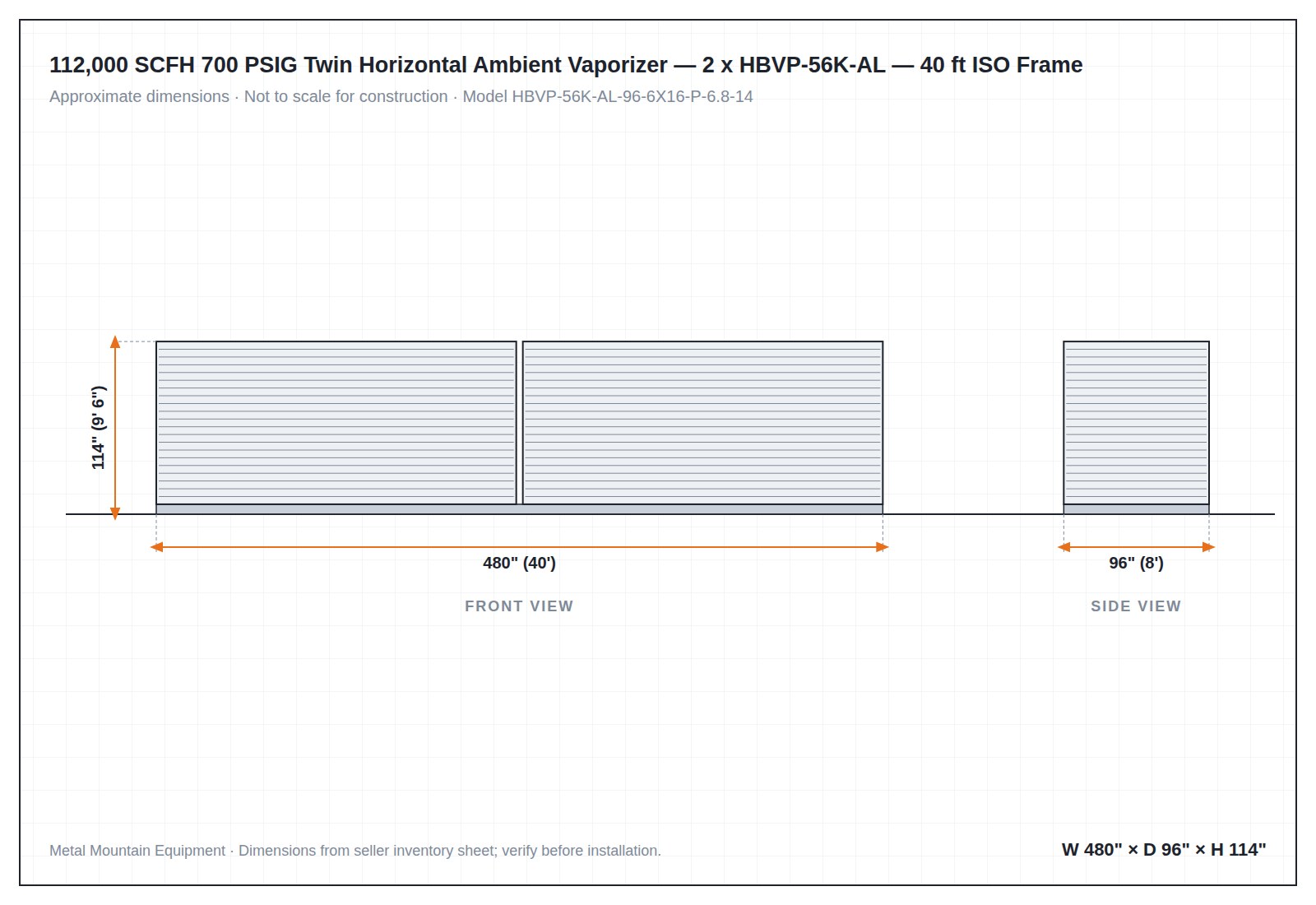
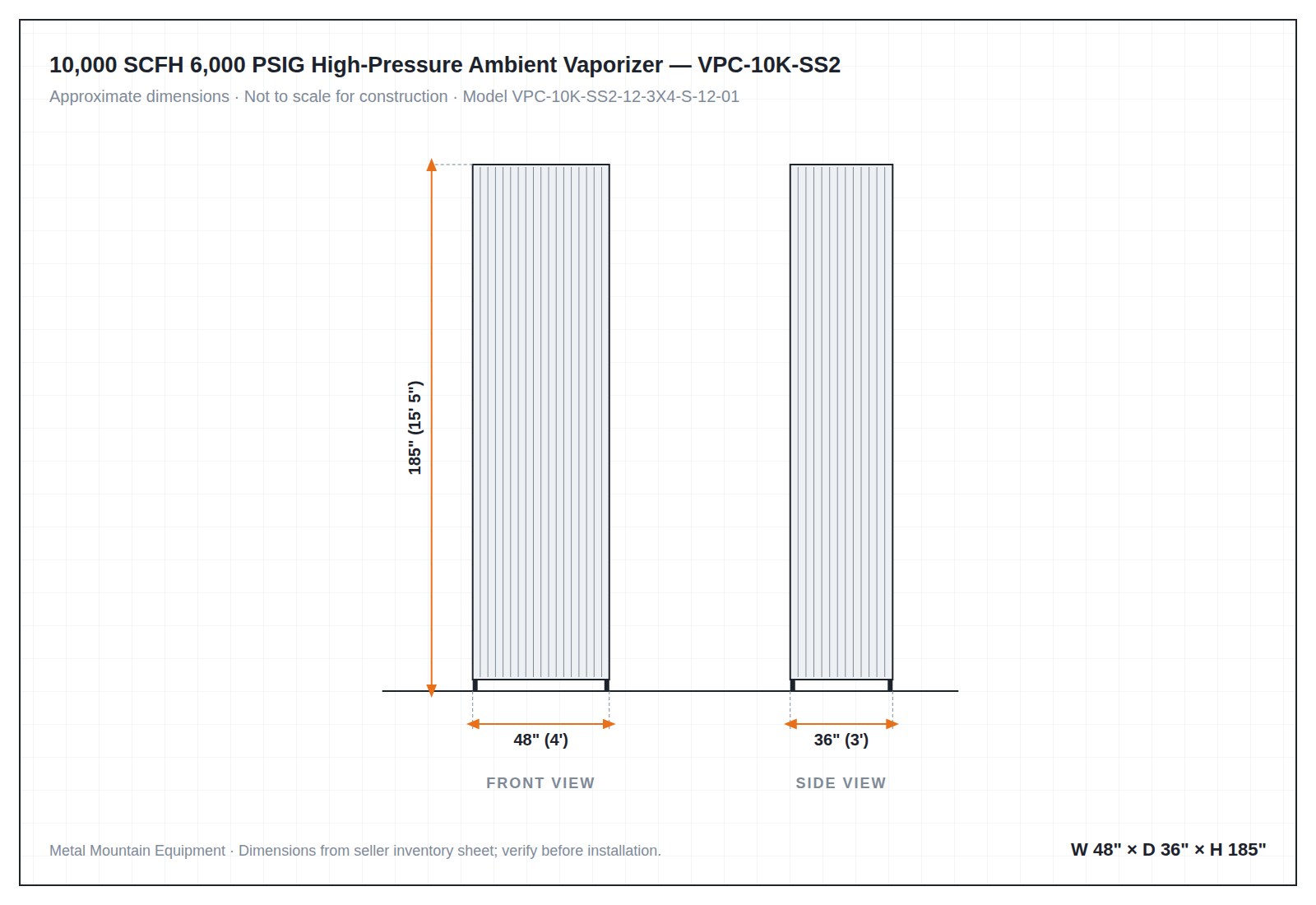
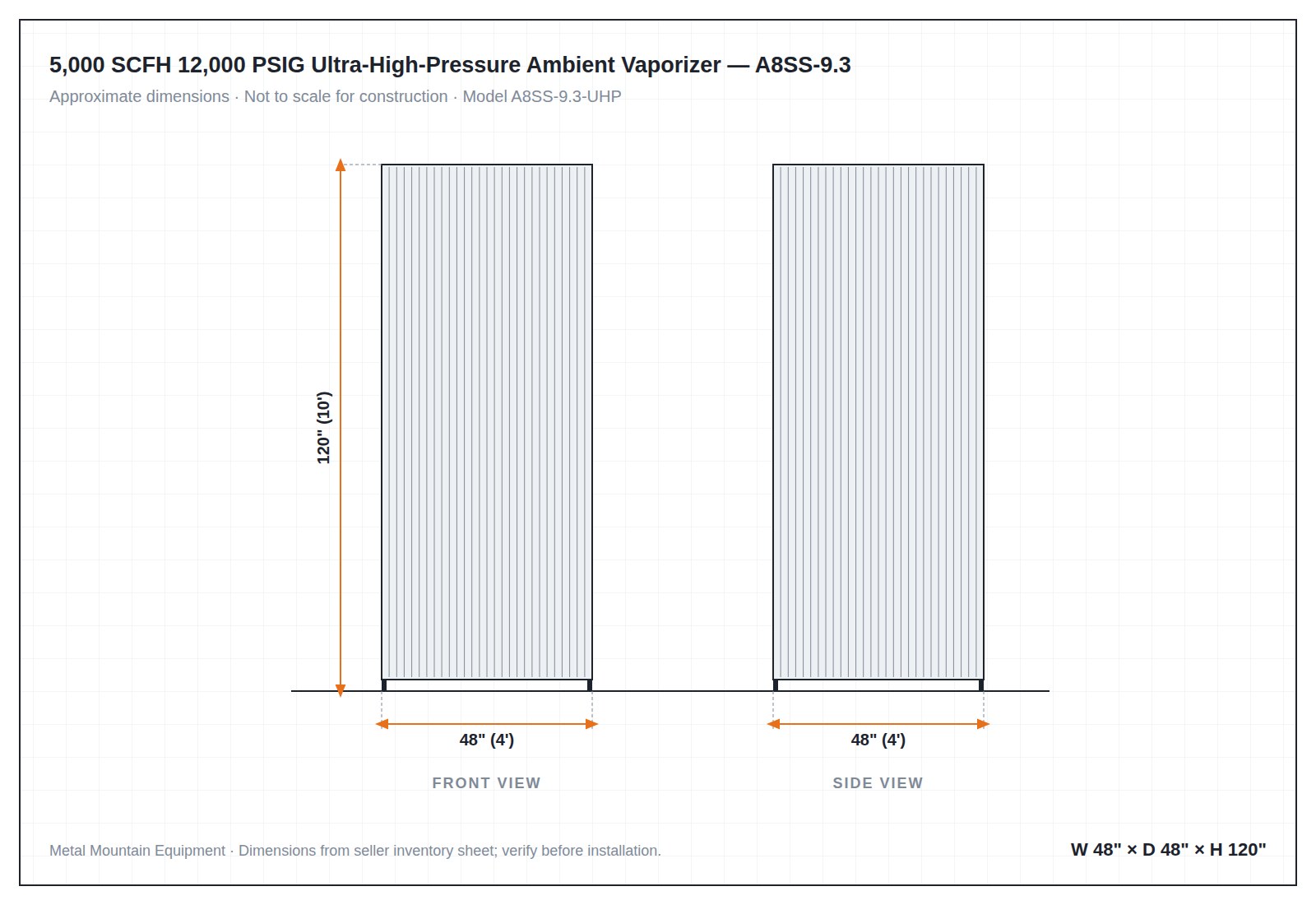
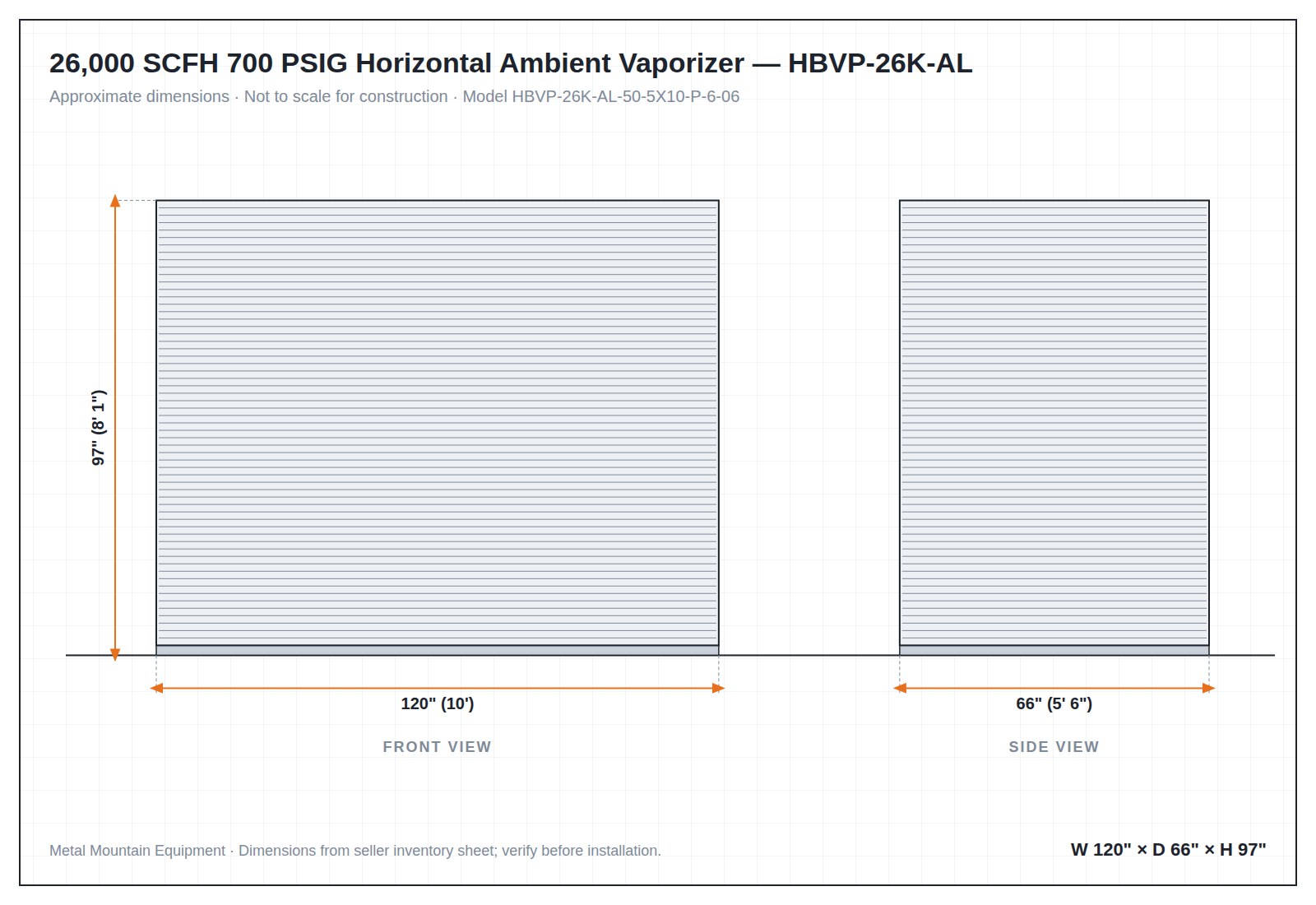
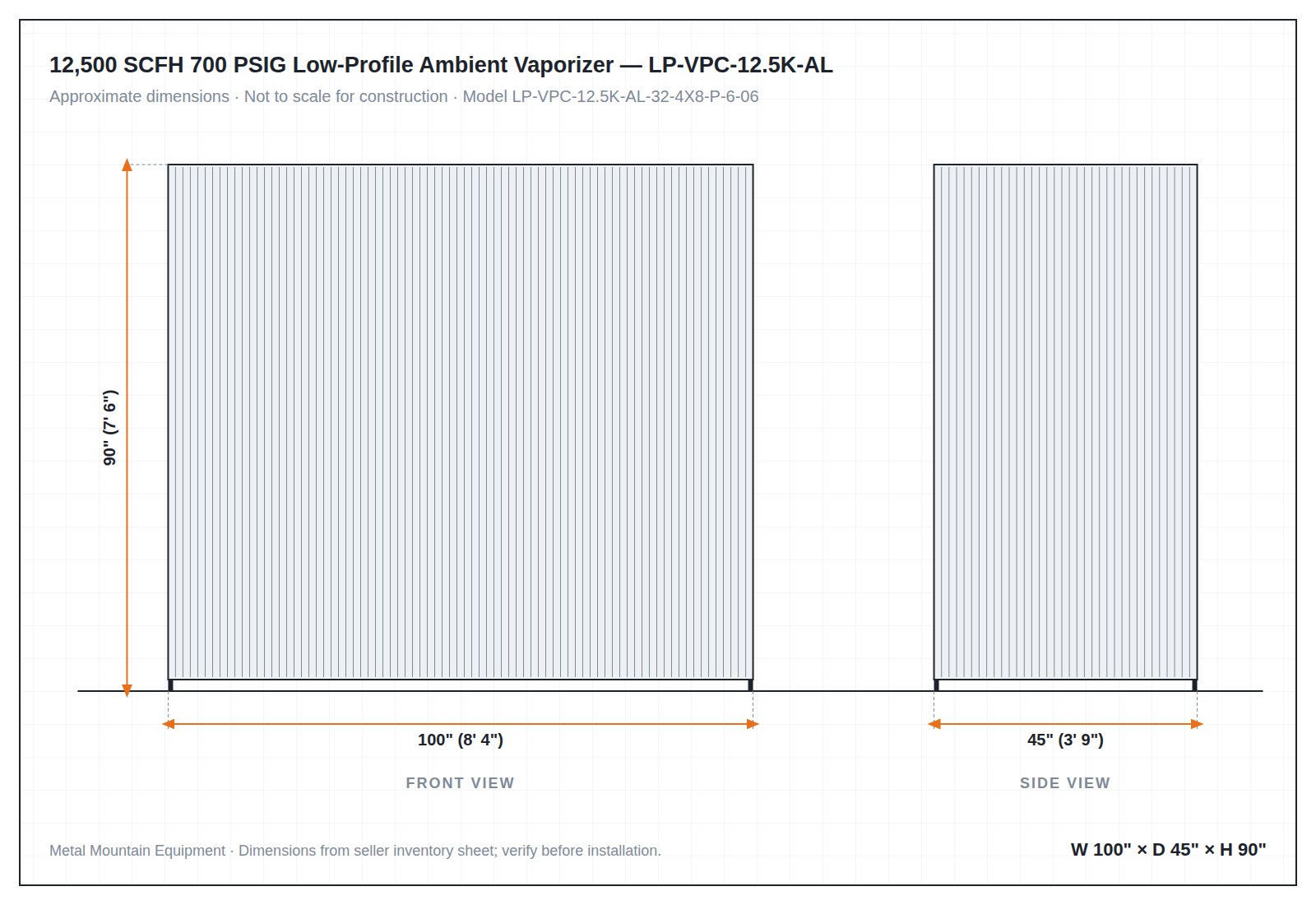


Frequently Asked Questions
Ambient Air Vaporizers questions
Ambient Air Vaporizers basics
What is an ambient air vaporizer?
It's a finned-tube heat exchanger that uses heat from the surrounding air to turn cryogenic liquid into gas, with no fuel cost. Natural-draft units have no fan. Forced-draft units add a fan and lose capacity if it stops. Fins are usually aluminum, and high-pressure models use stainless or alloy tube liners.
Sources: Chart vaporizers · AIGA 027/24 · Thermax SuperGap brochure
Why do ambient vaporizers ice up, and how is that handled?
Frost building on the fins during operation is normal and cuts output. Capacity returns after a defrost, ideally by stopping flow when the air is above freezing. Sites that run continuously use two vaporizers or banks and switch between them, so one defrosts while the other works.
Sources: Thermax Installation & Operating Instructions · AIGA 027/24 · Thermax Mega-fin brochure
Do ambient vaporizers make fog?
Yes. In some weather they produce dense fog around the unit that sharply reduces visibility. Plan placement around roads, walkways and work areas.
Buying used ambient air vaporizers
How does an ambient vaporizer derate in practice?
Nameplate flow is tied to rating conditions. One major line rates its units at 50°F, 50% humidity and 8 hours of continuous service between defrosts, adjusted by gas type. Colder weather, longer runs and ice on the fins all reduce real output, so size for winter. Continuous duty beyond the rated period calls for a switching system.
Sources: Thermax SuperGap brochure · Chart: Vaporizer sizing
What should I inspect before buying a used ambient vaporizer?
Look for distortion from heavy ice or rough handling. Repeated partial thaw and refreeze can build dense ice that deforms the structure. Lightly bent fins usually don't matter unless they're badly out of position. Check for signs of leaks and damaged interconnecting tubing, and ask whether it was ever run past its rated duty or left heavily iced.
Sources: Thermax Installation & Operating Instructions · AIGA 027/24
Why does outlet low-temperature protection matter on an ambient bank?
An overdrawn or iced unit, or a changeover valve that fails to switch, can send very cold gas downstream, where carbon steel piping can crack suddenly. Guidance calls for an outlet temperature sensor with automatic shutoff, tested regularly. Some systems add an electric trim heater to hold outlet gas above a minimum temperature.
Sources: EIGA Doc 133 · AIGA 027/24
What paperwork matters, and can it change gas service?
Get the nameplate and the manufacturer's datasheet showing design pressure, design code and capacity basis. Many ambient units are built to ASME B31.3 rather than as Section VIII vessels, so a U-1A may not exist and the maker's test records matter more. Changing gas service depends on the manufacturer, so contact them. Oxygen service needs cleaning for oxygen. On LNG specifically: that call is ours, not something the sources below set — we treat units built for LNG as staying in LNG service.
Sources: Thermax SuperGap brochure · ASME Form U-1A · EIGA Doc 33/18
General guidance for this equipment type. Specifications, condition and history vary by unit — ask the seller about the one you're considering.
Industry News
Related news
Browse by gas service
More cryogenic vaporizers
Every listing on Metal Mountain shows capacity, pressure rating, condition and location up front, with full specifications and photos on the listing page. Pricing is shown where the seller publishes it; otherwise request pricing and the seller responds directly.
Sizing a system? Use the gas capacity calculator to convert between vessel water volume and gas capacity in SCF for helium, hydrogen, nitrogen, oxygen, argon, air and natural gas.
Selling this kind of equipment?
We move your inventory online — photos, specs and all — usually within a day.
List Your Equipment